Allergen management with batch-level evidence.
Because "the label was right" needs proof, per batch.
Undeclared allergens are the most common cause of food recalls in Ireland and the UK, and almost every case traces to the same gap: the label said one thing, the batch contained another, and no record connects the two. Keystone closes that gap structurally: every batch carries its recipe version and the actual ingredient lots consumed, so the declaration on the label has a per-batch evidence trail behind it.
- Every batch records its recipe version + actual ingredient lots consumed
- Supplier allergen alert → affected batch and customer list in minutes
- Versioned specs: historic batches resolve against the recipe current when made
- Supports FIC (Reg. 1169/2011) declaration diligence with real records
Real screens, from our Public Sandbox.
Every screenshot below is captured from the Public Sandbox demo tenant with sample Irish dairy data. No mockups, no client data, no NDAs.
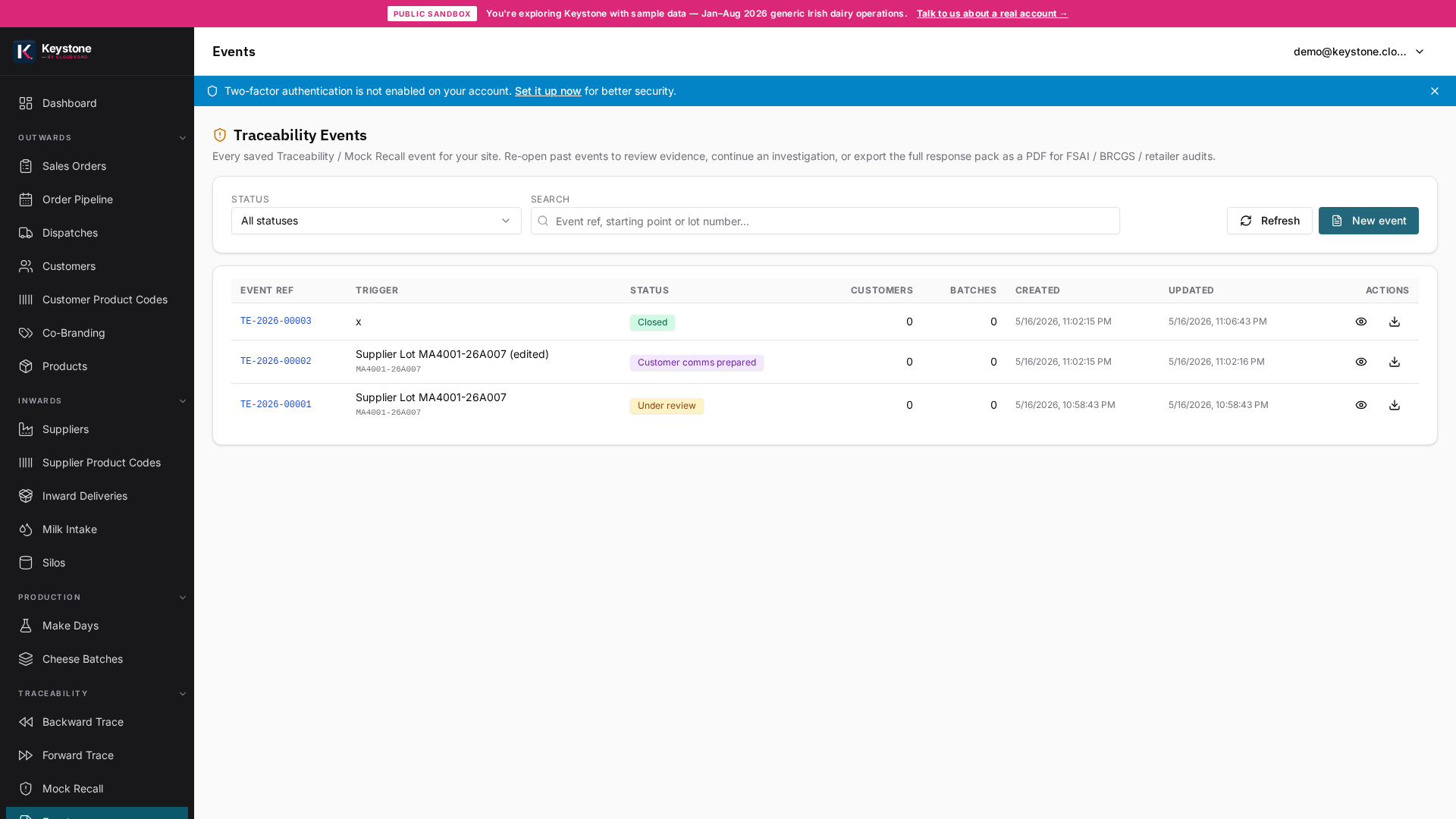
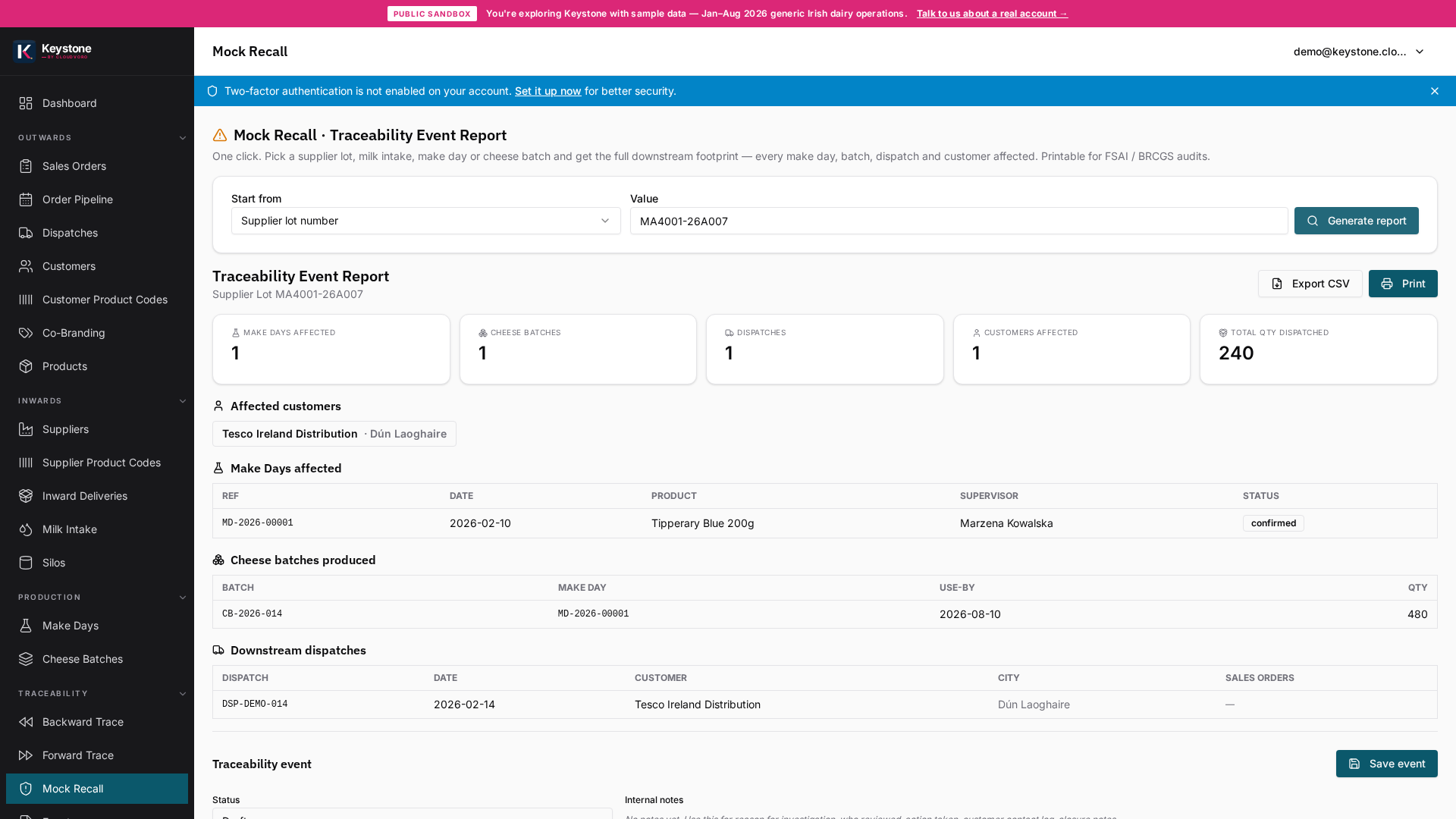
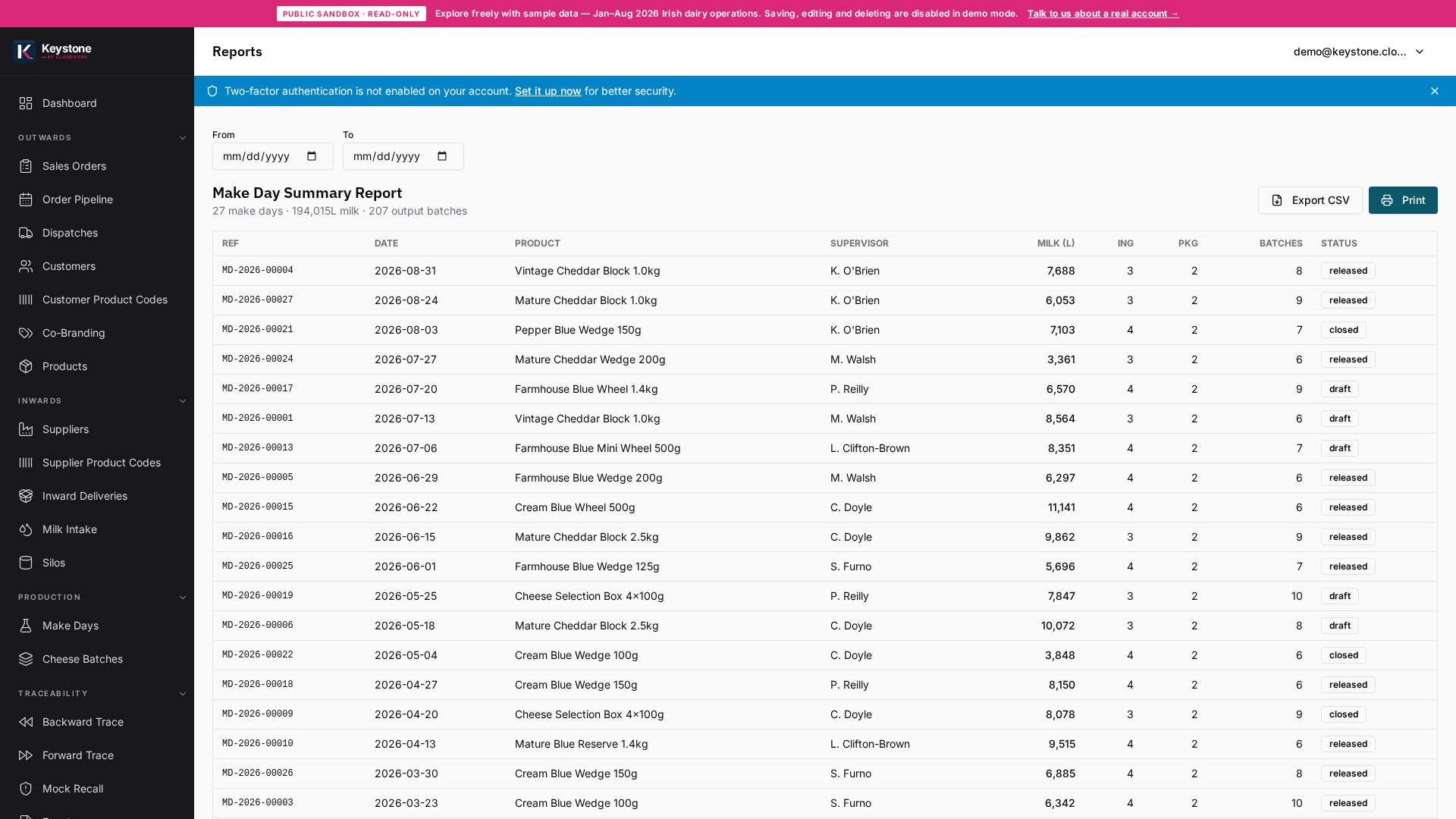
Not in the kitchen, in the paperwork gap.
The classic undeclared-allergen incident isn't a rogue ingredient; it's drift. A supplier reformulates and the new spec carries mustard. A recipe changes but the label artwork doesn't. A substitution happens on the floor at 6am and nobody writes it down. Each is a records problem before it's a labelling problem, and the investigation afterwards asks precisely what your records can't answer: which batches were made with the new spec, from which date, and who received them? Keystone answers it structurally: ingredient lots link to supplier specs, batches record actual consumption, and spec changes are versioned with effective dates.
Allergen control as records, not vigilance.
Evidence engine, not artwork management.
Keystone is the record layer: what each batch contained and where it went. It does not generate label artwork or legally validate your declarations, your labelling process and technical review remain yours. What it removes is the terrifying question in every allergen investigation: 'can we prove what was actually in it?' Prepared food, bakery and dairy producers feel this most; the batch-consumption model is the same across all of them.
Related pages on this stack.
Questions buyers actually ask.
Does Keystone generate allergen labels?
What happens when a supplier reformulates?
Can it handle allergen alerts through sub-assemblies?
Does this help with a BRCGS or retailer audit?
What about cross-contact / "may contain"?
Ready to see if Keystone fits your floor?
20-minute discovery call. No sales pitch. Written scope within 48 hours if we fit, referral to someone better if we don't.
Talk to us