Tesco does not care if your dispatch is correct.
They care if it's correct in their format.
Every Irish food producer learns this the hard way. Your dispatch is technically right, accurate weight, correct batch, valid COA. But it is not in Tesco's exact format, with the right block layout, the right SSCC, the right code on the right line. Result: pallet rejected at depot, your phone rings, somebody drives over. Keystone ships with retailer-specific templates for the formats that actually matter to Irish producers.
- Live templates for Tesco IE, Lidl, M&S, SuperValu, Centra, SPAR, Musgrave
- Customer SKU mapping for retailer private-label codes
- Per-retailer dispatch note + pallet label + COA combinations
- Founding partner ships to nine retailer chains across multiple markets
Real screens, from our Public Sandbox.
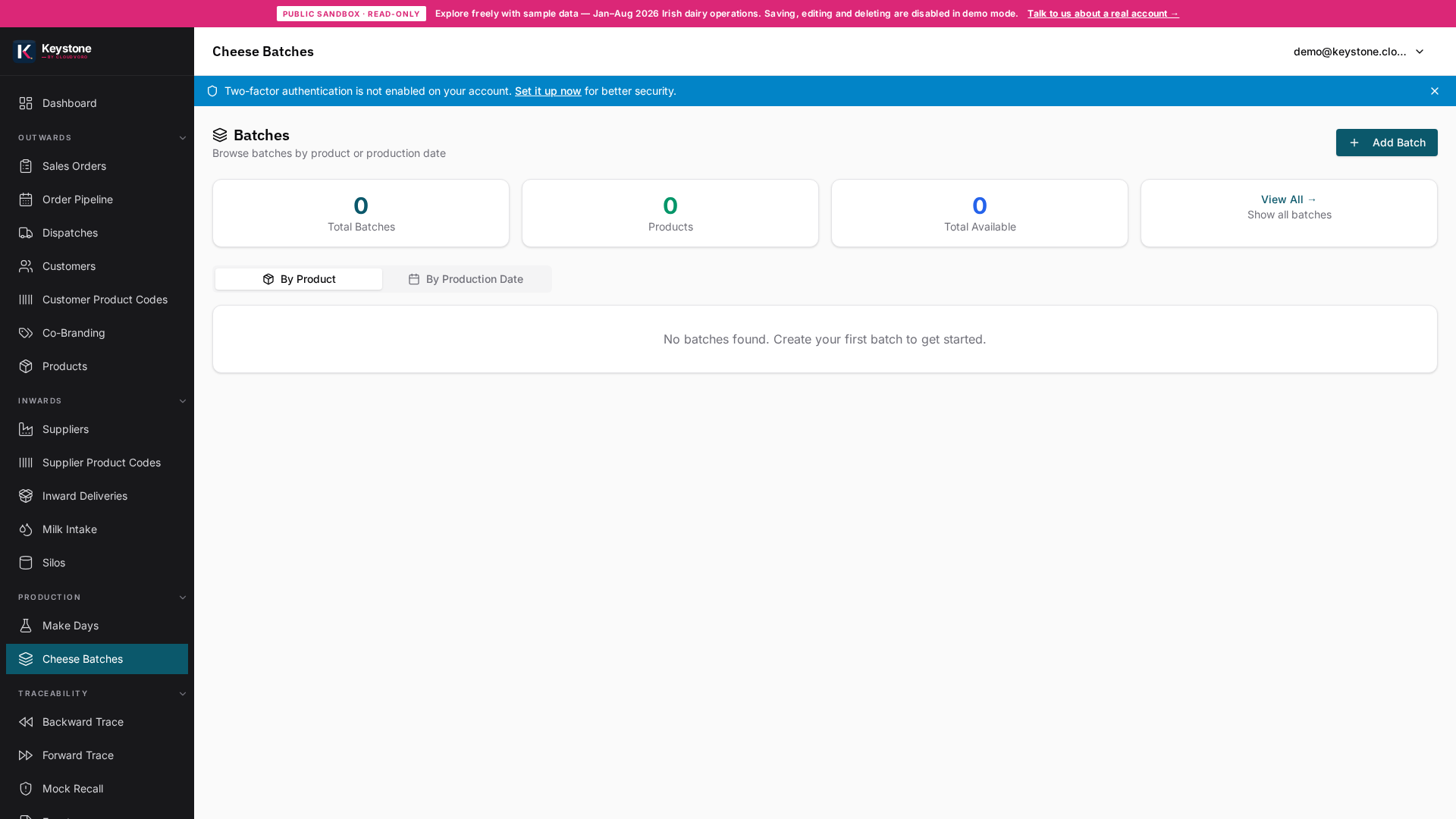
Every screenshot below is captured from the Public Sandbox demo tenant with sample Irish dairy data. No mockups, no client data, no NDAs.
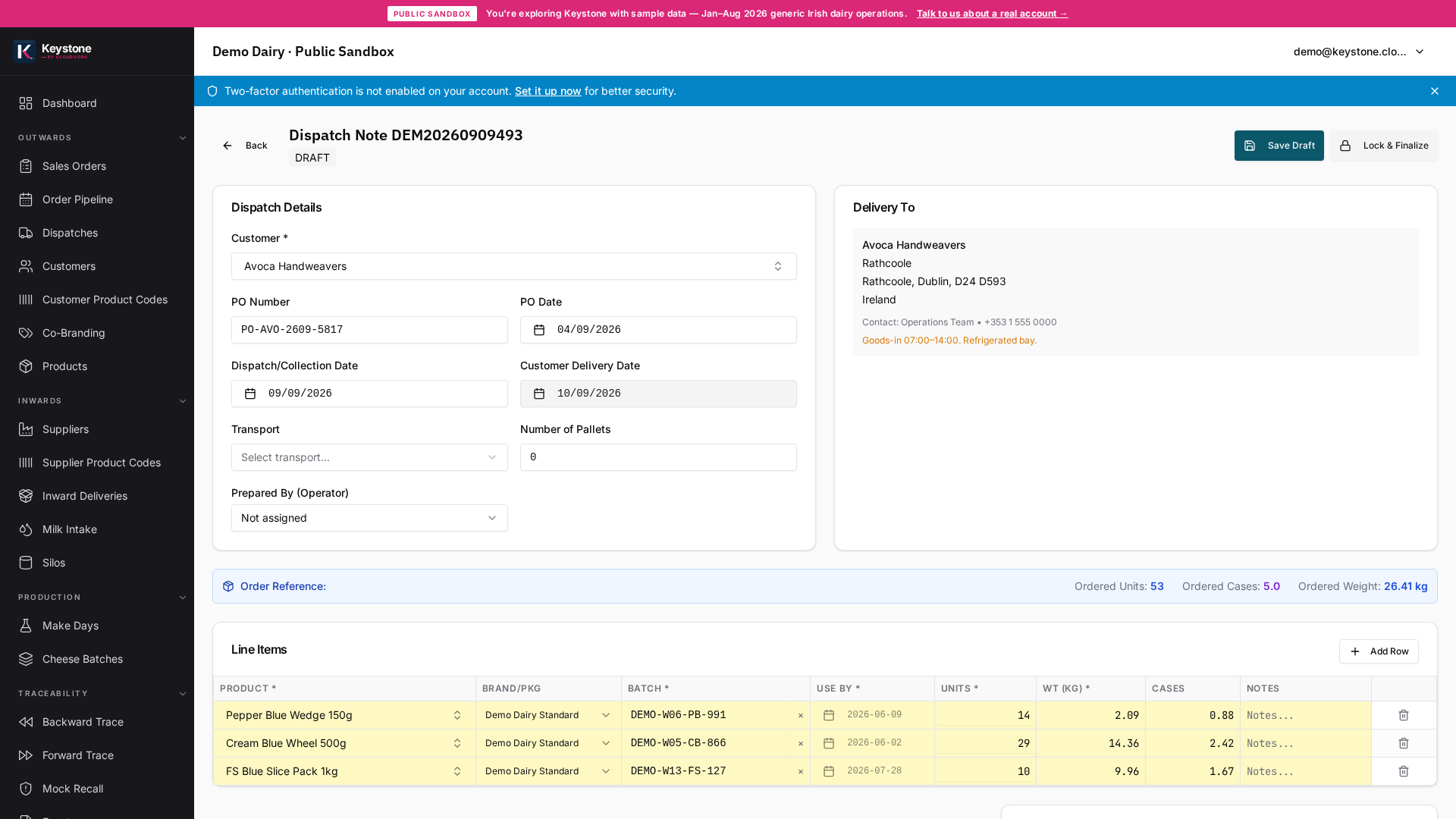
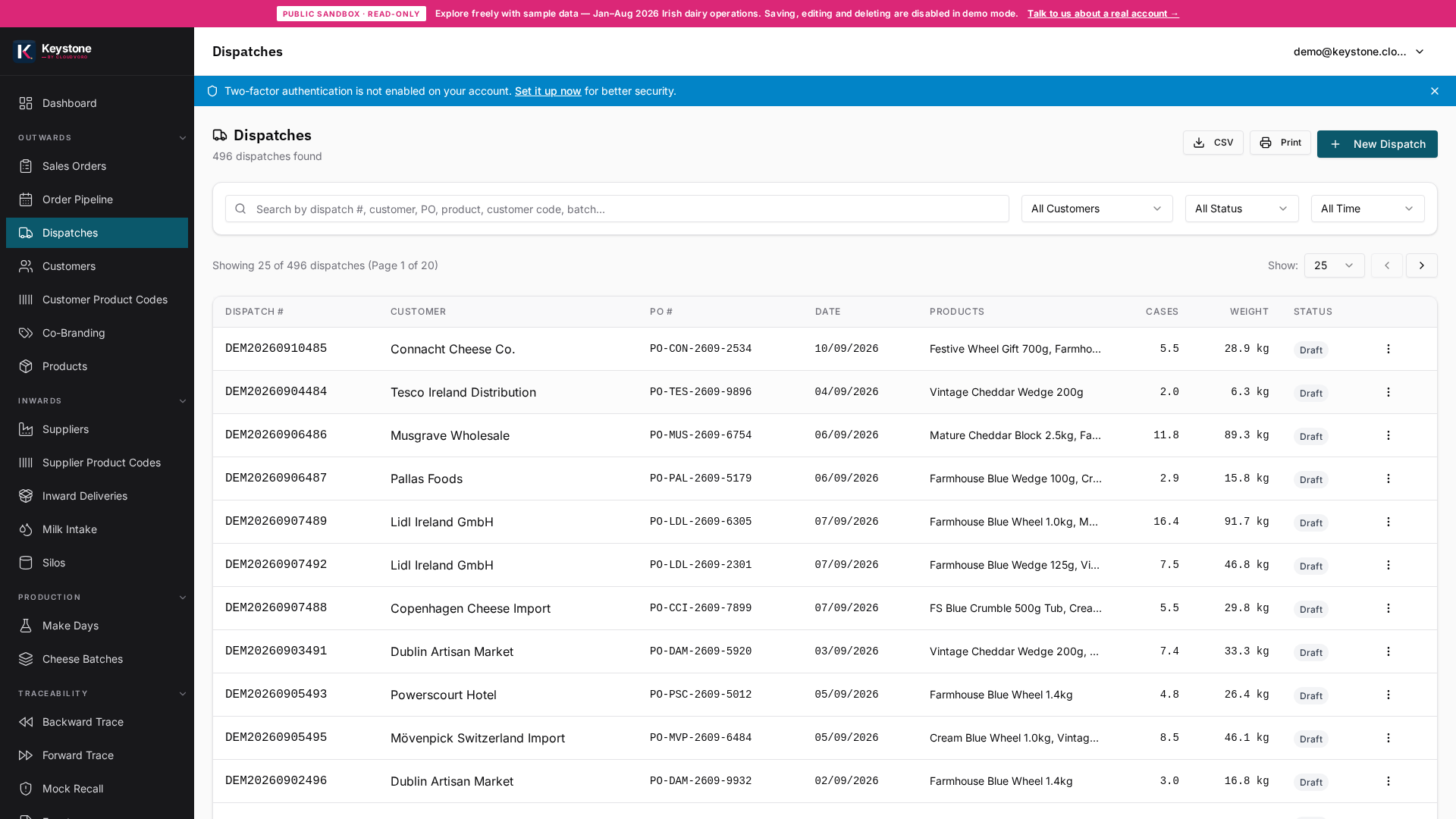
Every multiple has its own format, and its own patience.
Tesco wants a specific dispatch-note block. Lidl wants a specific barcode pattern on the pallet. M&S wants the EAN-13 and customer SKU positioned a certain way. SuperValu and Centra share a Musgrave-group format with their own quirks. SPAR has its own EDI-adjacent format. Each retailer treats deviations from its template as a rejection, not a suggestion. Your team learns these rules by getting pallets rejected, Keystone gets your team out of that loop.
Right format, right code, right scan, every time.
Production layer next to your accounts package.
Keep AccountsIQ, Sage or QuickBooks. Keystone owns retailer dispatch end-to-end, order, batch allocation, dispatch note, pallet label, COA, post-dispatch invoice publish to your accounts package.
Related pages on this stack.
Questions buyers actually ask.
What if a retailer changes its template?
Can we add a retailer that's not in your default list?
Does this include retailer EDI?
What about retailer-specific labelling auditors?
Can dispatch staff do this themselves?
Ready to see if Keystone fits your floor?
20-minute discovery call. No sales pitch. Written scope within 48 hours if we fit, referral to someone better if we don't.
Talk to us