Batch traceability without the spreadsheet acrobatics.
Full upstream + downstream chain in under 30 seconds.
Every batch carries its full chain inside Keystone, supplier deliveries upstream, dispatches and customer branches downstream. Two clicks, signed PDF, done. No more Vlookup chains, no more 'which version of the Excel was current that week.'
- Forward trace: batch → dispatch → customer → retailer branch (incl. private-label re-codes)
- Backward trace: dispatch line → batch → supplier delivery → raw-material lot
- Mock-recall in 90 seconds (BRCGS compatible)
- Immutable audit log, every change, signed, who/when/why
Real screens, from our Public Sandbox.
Every screenshot below is captured from the Public Sandbox demo tenant with sample Irish dairy data. No mockups, no client data, no NDAs.
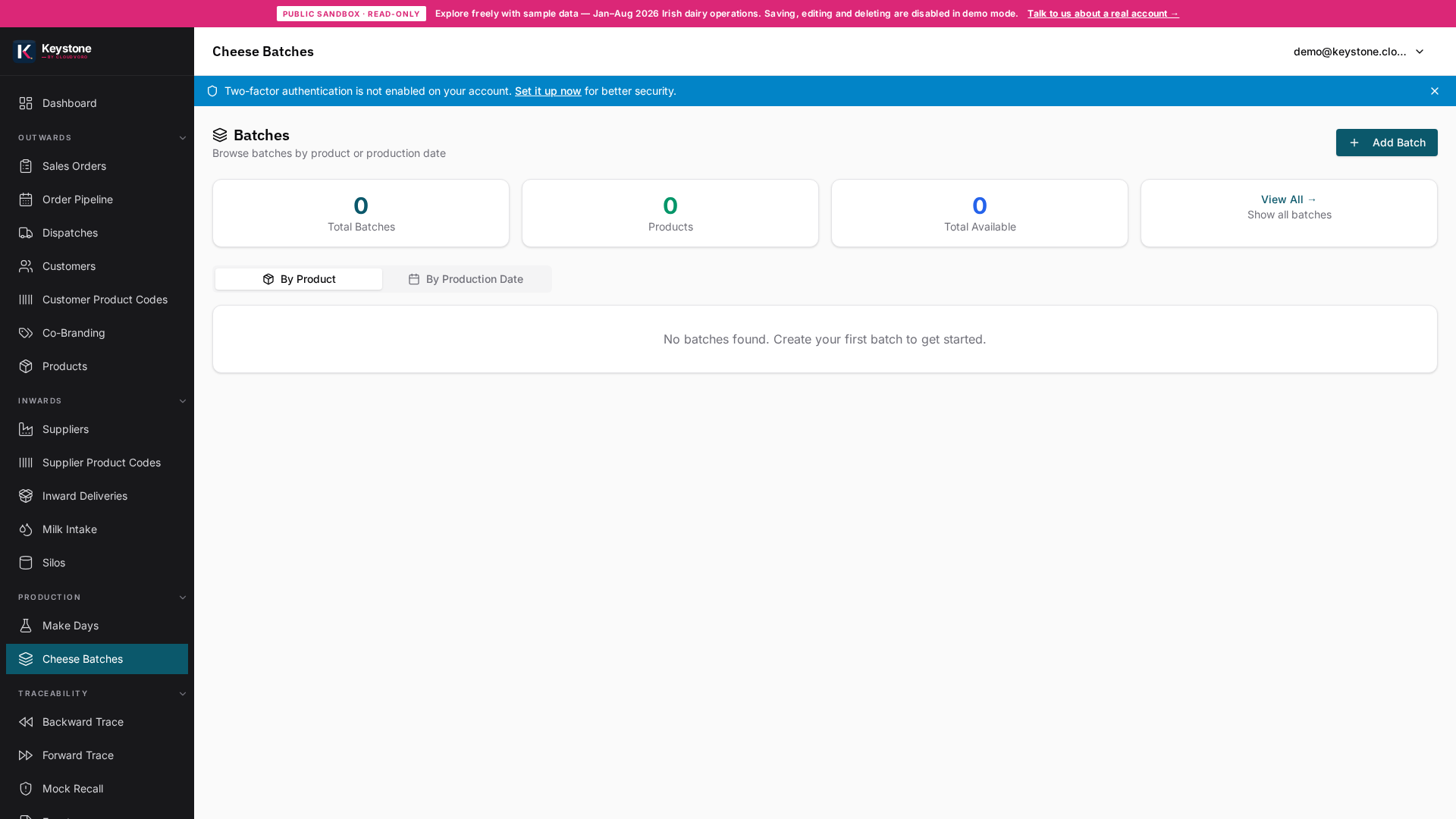
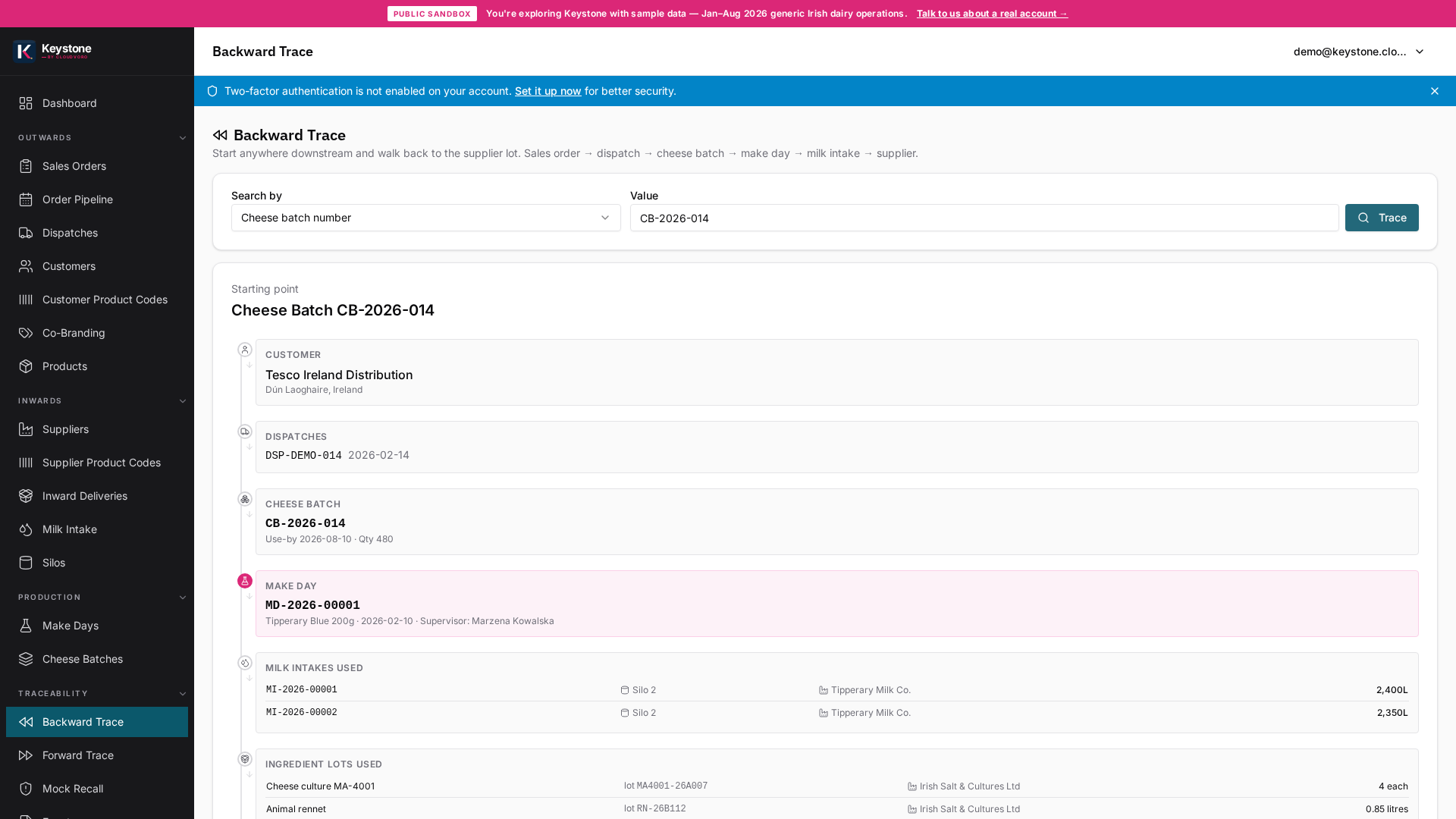
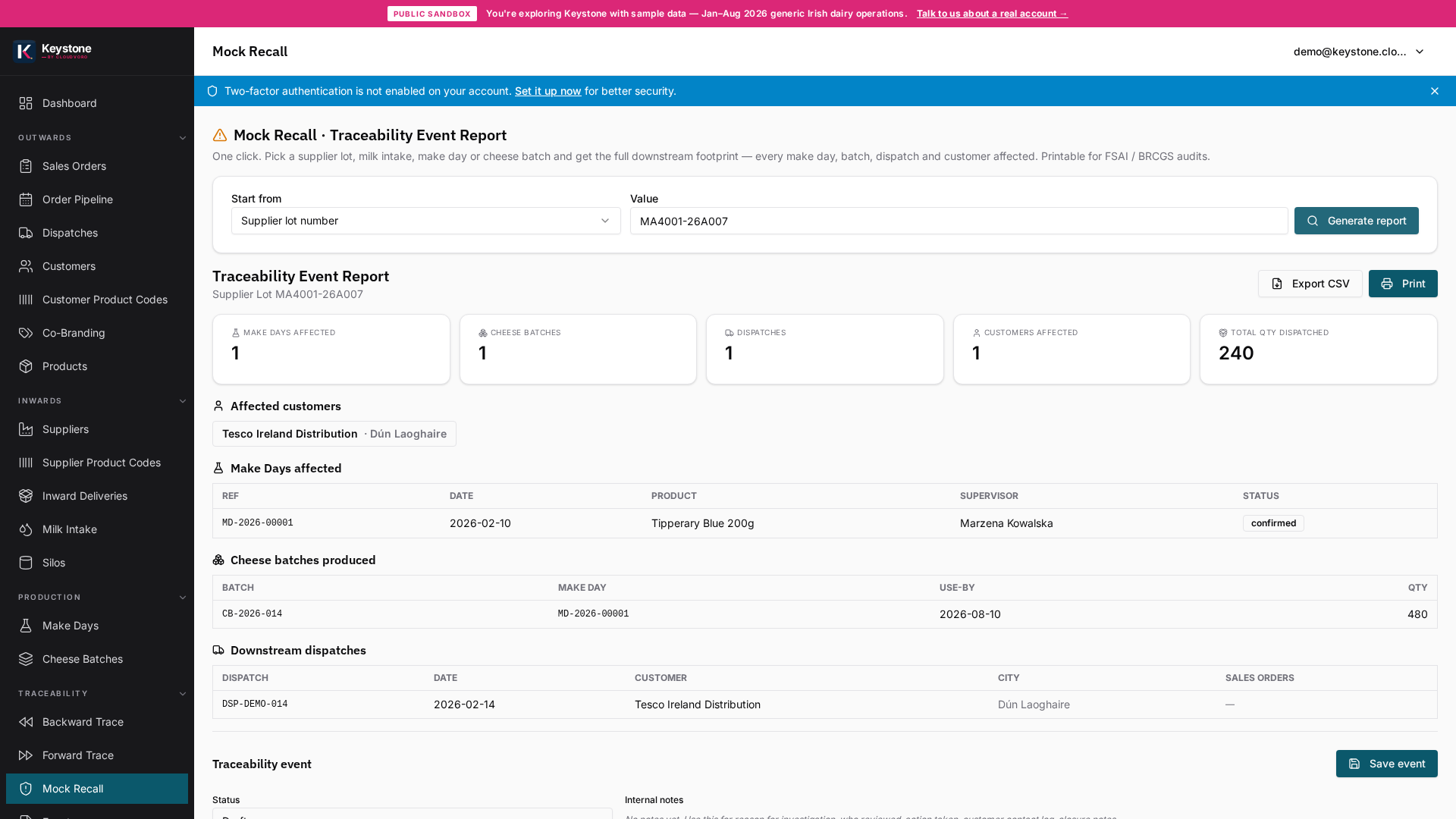
Every batch is a node in a chain. We hold the chain.
When a batch is created in Keystone, every input, supplier delivery, raw-material lot, QC record, transformation step, is recorded as an upstream link. When that batch is dispatched, every customer and retailer branch it reaches is recorded as a downstream link. The chain is cryptographically signed at every write, so neither side can be tampered with after the fact.
The questions auditors actually ask.
The chain survives silos, brines and rework, where spreadsheets break.
The hard part of batch traceability is never the happy path; it's the intermediate stages. Milk from three farms pools into one silo. Offcuts from Tuesday's batch fold into Thursday's. A brine bath touches six batches a week. In spreadsheet systems these commingling points are exactly where lot identity dies, and why mass balances refuse to close during the annual traceability test. Keystone models intermediates as first-class links in the chain: a silo run knows its contributing deliveries, a rework entry names its source and destination batches with weights, so the chain passes through every commingling point intact, in both directions.
Produced = dispatched + stock + waste + samples. Computed, not reconstructed.
BRCGS expects the annual traceability test to close a mass balance within 4 hours, and unexplained quantity gaps fail the exercise regardless of how fast the trace ran. Because Keystone's dispatch lines, stock counts, waste entries and sample logs all reference batch identity, the reconciliation for any batch is arithmetic the system already knows: quantity produced against every documented destination, with the variance percentage on screen. Producers who used to spend the afternoon hunting for missing kilograms now spend it writing the two-paragraph narrative report.
What actually changes when you switch.
Related pages on this stack.
Questions buyers actually ask.
How is Keystone different from a generic ERP?
What about variable-weight production (e.g. cheese wheels)?
Can I trace by customer SKU code, not just mine?
How far back does the audit log go?
Ready to see if Keystone fits your floor?
20-minute discovery call. No sales pitch. Written scope within 48 hours if we fit, referral to someone better if we don't.
Talk to us