Traceability software built for BRCGS.
Designed against §3.9 / §3.11. Tested in real audits.
BRCGS raised the bar on traceability. §3.9 demands a verified system that links inputs to outputs end-to-end. §3.11 demands traceability tests at frequencies you specify, with documented results. Keystone is built to make both painless.
- Designed against BRCGS traceability standards traceability clauses
- Mock-recall in 90 seconds, signed PDF for audit
- Both directions: upstream supplier chain + downstream customer chain
- Audit-trail of every traceability test run
Real screens, from our Public Sandbox.
Every screenshot below is captured from the Public Sandbox demo tenant with sample Irish dairy data. No mockups, no client data, no NDAs.
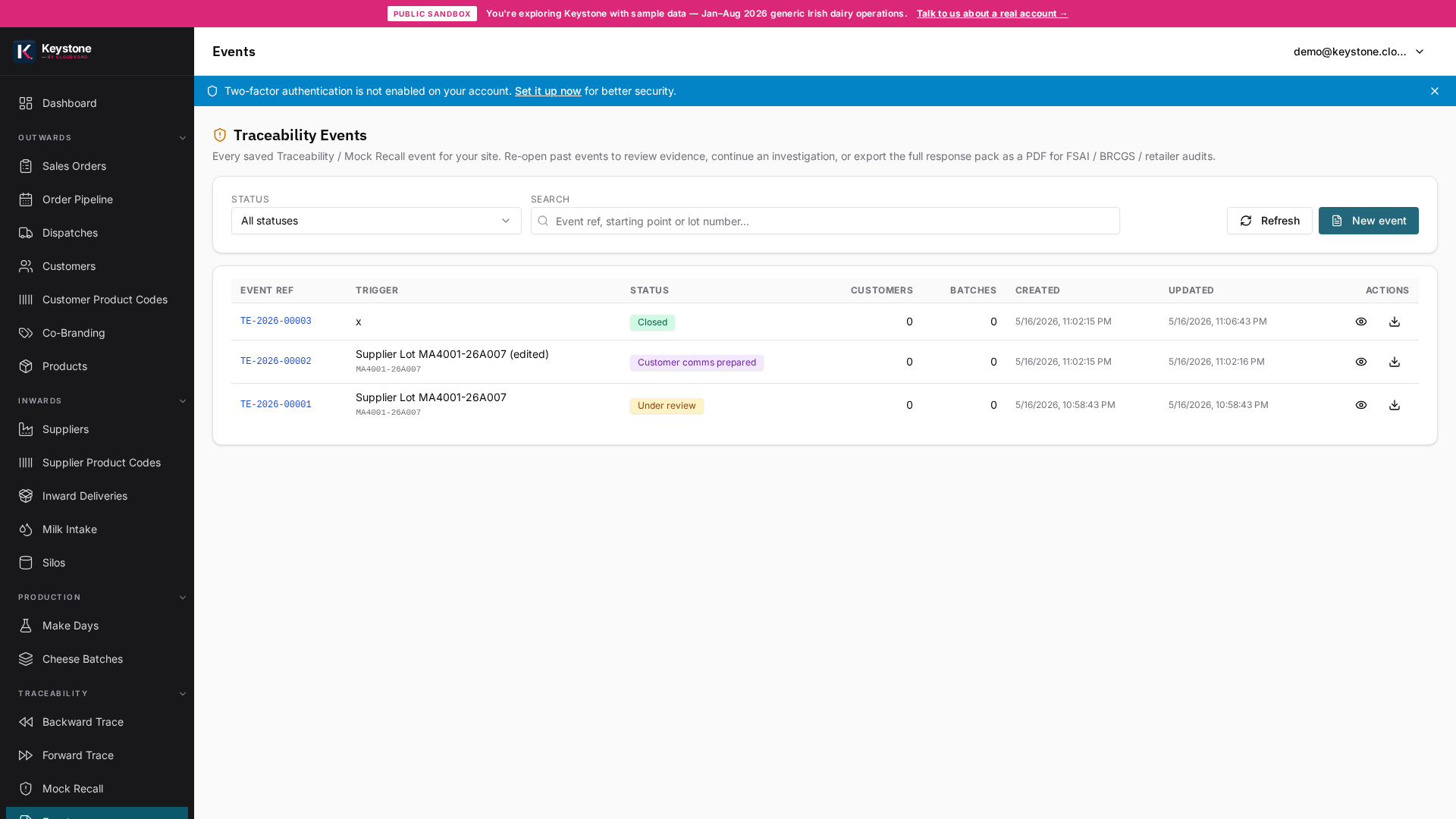
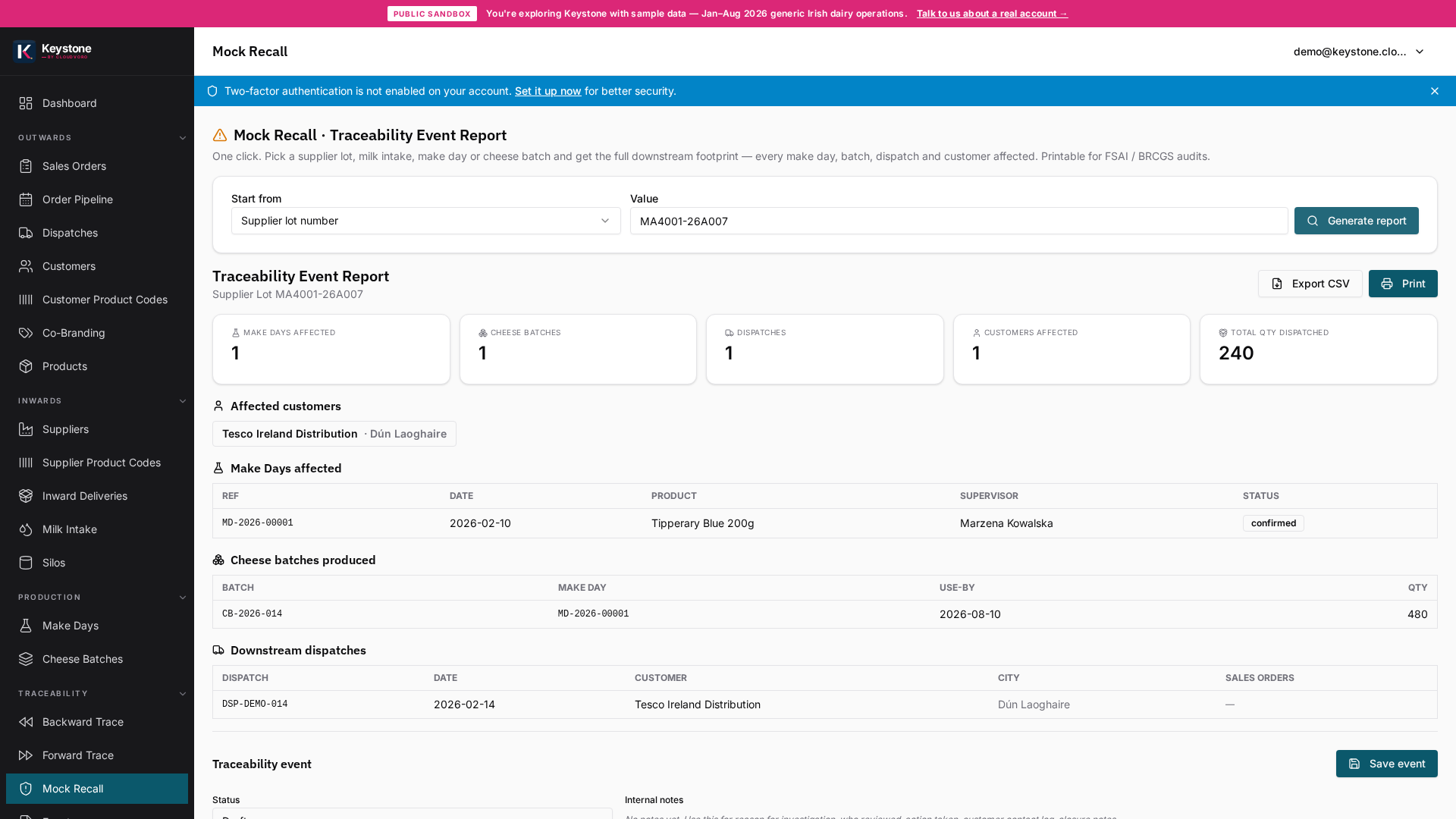
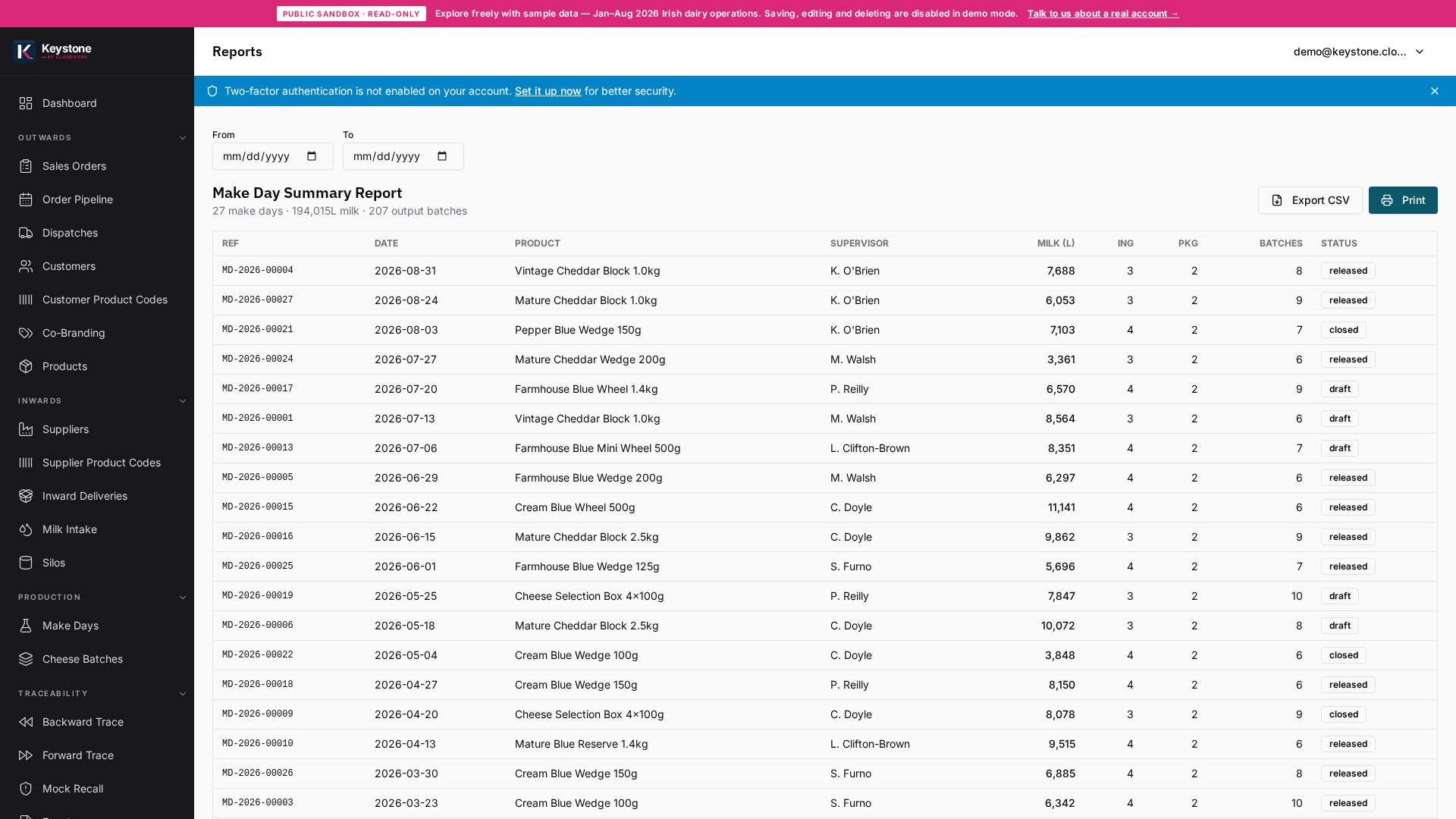
The shorthand BRCGS auditors actually look for.
§3.9, your traceability system must link inputs (raw materials, packaging, primary processing aids) to outputs (finished goods), in both directions, with a defined response time. §3.11, you must test the system at documented intervals, with results retained. Most producers fail not because they can't trace, but because they can't prove the test was run and the result was correct.
Clause-by-clause coverage.
The annual test, and the vertical audit, without the scramble.
BRCGS traceability requirements expects the traceability test to achieve full traceability, including a mass balance, within 4 hours of the lot being nominated, and most auditors additionally run a live vertical audit, picking a lot during the visit and watching you trace it. Keystone changes the shape of both: the chain and quantities render in under 30 seconds, so the 4-hour window is spent on the parts that deserve attention, verifying the waste and sample logs, closing the reconciliation, writing honest findings. The vertical audit becomes a screen-share. We've written up what clause 3.9 actually asks for, in plain English, as a free guide.
The interlocking clauses your traceability carries.
Related pages on this stack.
Questions buyers actually ask.
Is Keystone a BRCGS-approved software?
What about BRCGS Issue 10?
Do you provide audit-prep support?
Can we restrict who can run a recall test?
Ready to see if Keystone fits your floor?
20-minute discovery call. No sales pitch. Written scope within 48 hours if we fit, referral to someone better if we don't.
Talk to us