FoodDocs writes the plan.
Keystone runs the production that has to follow it.
FoodDocs is a strong food-safety documentation platform, HACCP plans, monitoring templates, compliance content, training modules. It is built around the documentation lifecycle. Keystone is built around the production lifecycle, orders, batches, QC, dispatch, COAs, pallet labels, traceability. These are different jobs, and on a serious food site you probably want both.
- FoodDocs: HACCP documentation, monitoring forms, compliance content
- Keystone: orders, batches, QC execution, dispatch notes, COAs, pallet labels, traceability
- Both can coexist, Keystone references your FoodDocs HACCP plan
- Live with Cashel Farmhouse Cheesemakers, international distribution
Real screens, from our Public Sandbox.
Every screenshot below is captured from the Public Sandbox demo tenant with sample Irish dairy data. No mockups, no client data, no NDAs.
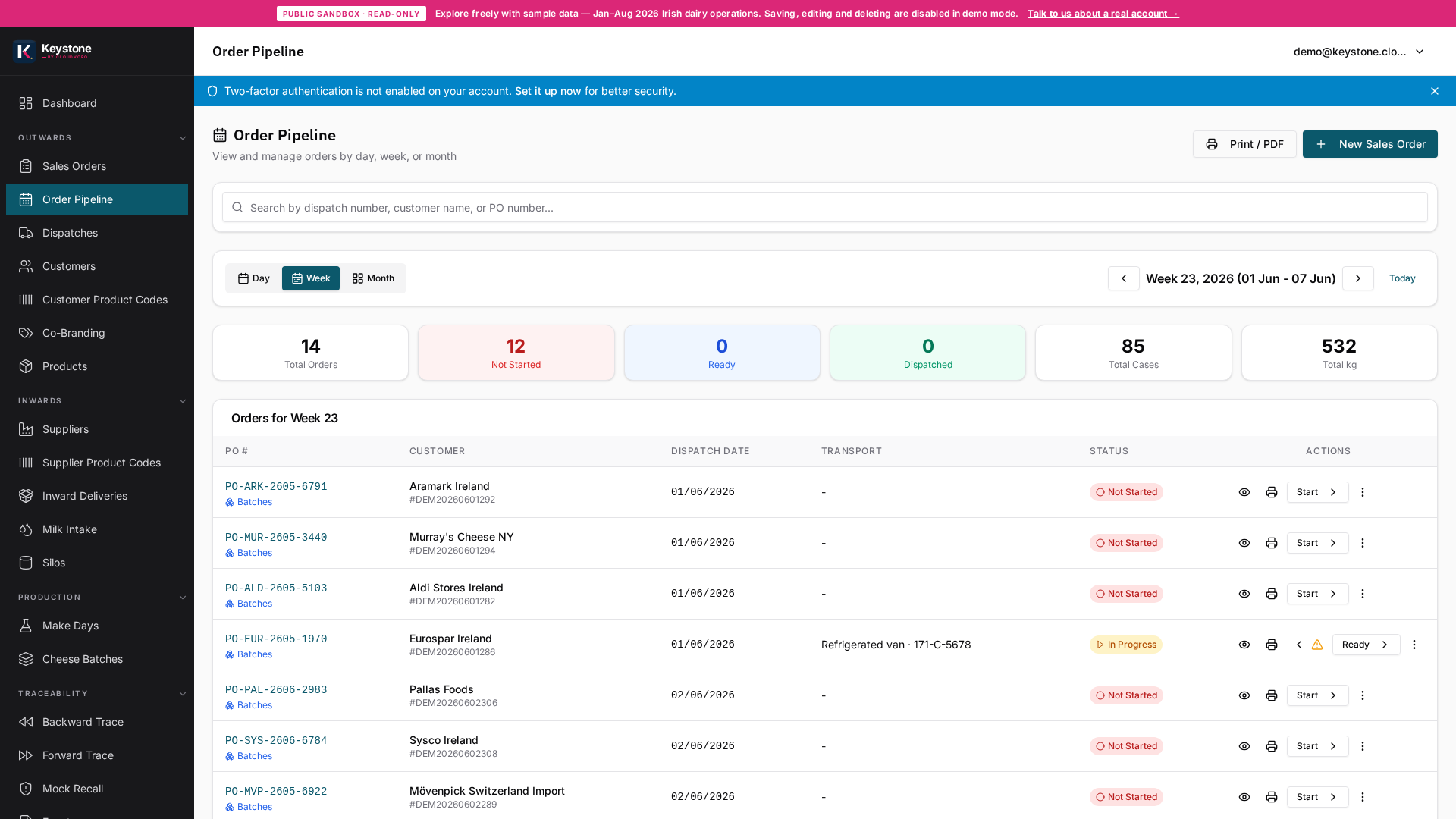
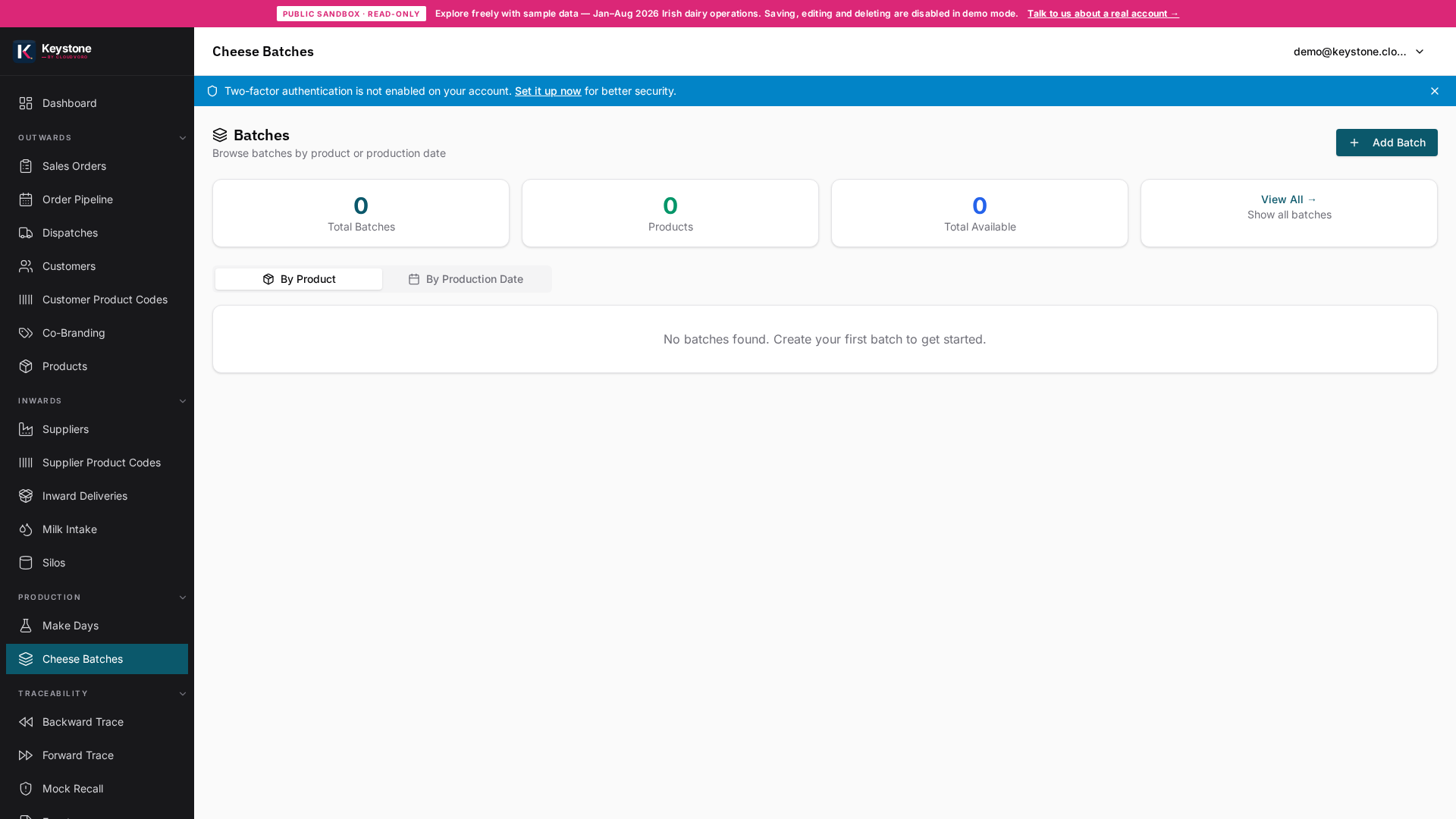
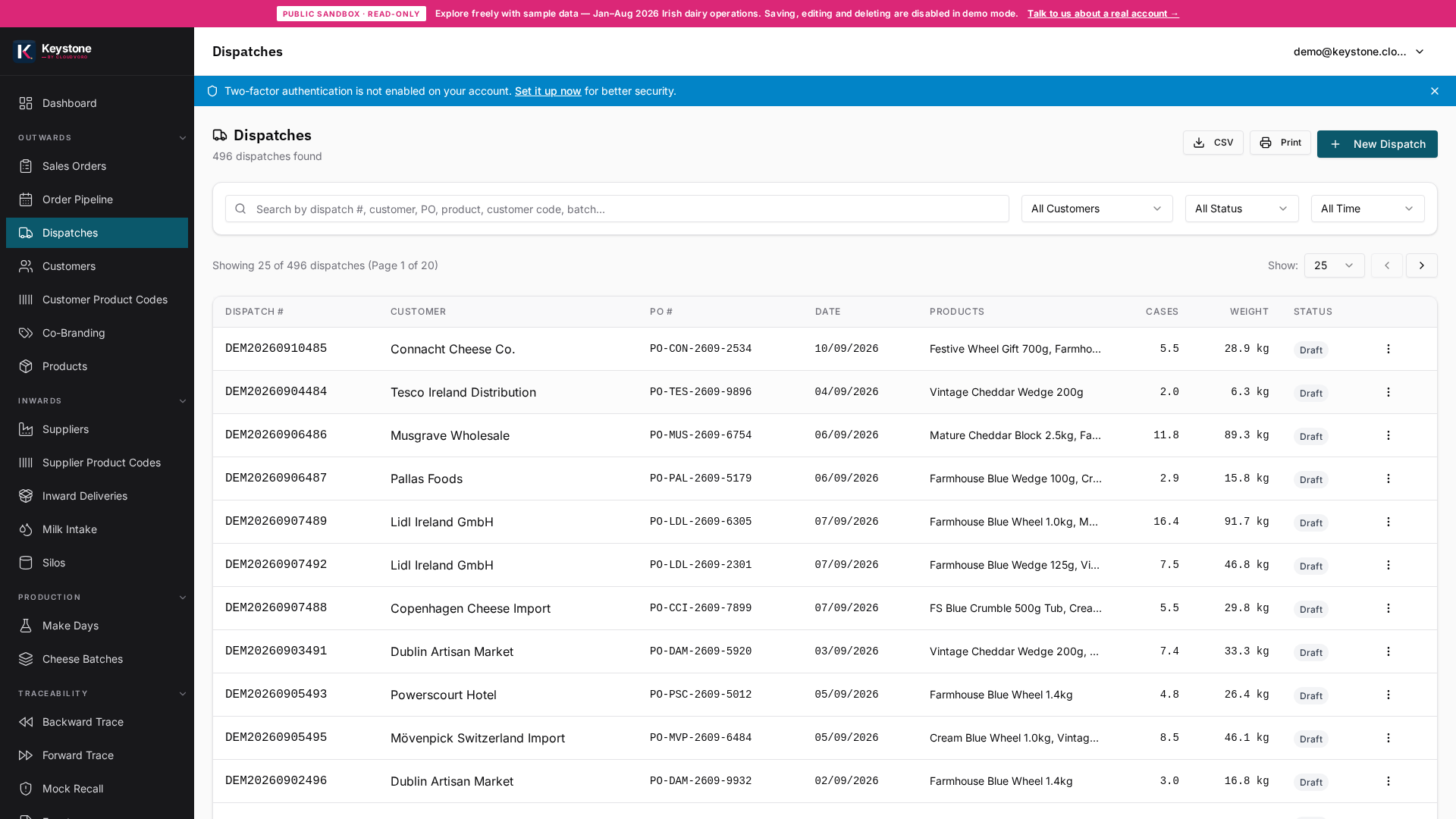
Documentation is one thing. Execution is another.
A HACCP plan is a document. Executing a HACCP plan on the production floor, capturing every CCP reading, every deviation, every corrective action, against the right batch, signed by the right person, at the right moment, is operational work. FoodDocs is excellent at the first job. Keystone is excellent at the second. On a real site you need both, and the two should reference each other rather than overlap.
Smaller operations doing HACCP-on-clipboards.
If you are a small food business with relatively simple production, no retailer multi-pallet dispatch and no per-batch COA obligation, FoodDocs alone may cover your safety-management need. You are not getting batch traceability, dispatch documentation or pallet-label automation, but you may not need those.
Real batches, real dispatches, real retailers.
A complement to FoodDocs, not a replacement.
Keystone's HACCP module is built around execution, capturing CCP measurements against the active batch, locking the batch on deviation, raising the corrective-action record. Your HACCP plan itself can live in FoodDocs (or any HACCP-coach output) and be referenced from Keystone. That keeps documentation in the right place and execution in the right place.
Related pages on this stack.
Questions buyers actually ask.
Can I run FoodDocs and Keystone together?
Does Keystone provide HACCP plan templates?
Why not just use FoodDocs for everything?
Can Keystone handle the whole food-safety record set?
Will an auditor be confused by two systems?
Ready to see if Keystone fits your floor?
20-minute discovery call. No sales pitch. Written scope within 48 hours if we fit, referral to someone better if we don't.
Talk to us