Seafood traceability software for processors and smokehouses.
Landing to smokehouse to dispatch, with the SFPA in mind.
Seafood traceability carries data no other sector does: catch area, production method, gear type, vessel or farm references, information that must survive processing and appear correctly downstream. The SFPA inspects against it, and buyers increasingly demand it for sustainability claims. Keystone carries these attributes on intake lots and holds the chain through brining, smoking, filleting and packing.
- Intake lots carry catch/consignment data: area, method, vessel or farm reference, dates
- Chain survives processing: filleting, brining, smoking, packing, with weights reconciled
- One-click chain PDF for SFPA inspection or a buyer query
- Batch-coded dispatch notes and labels, retailer and export formats
Real screens, from our Public Sandbox.
Every screenshot below is captured from the Public Sandbox demo tenant with sample Irish dairy data. No mockups, no client data, no NDAs.
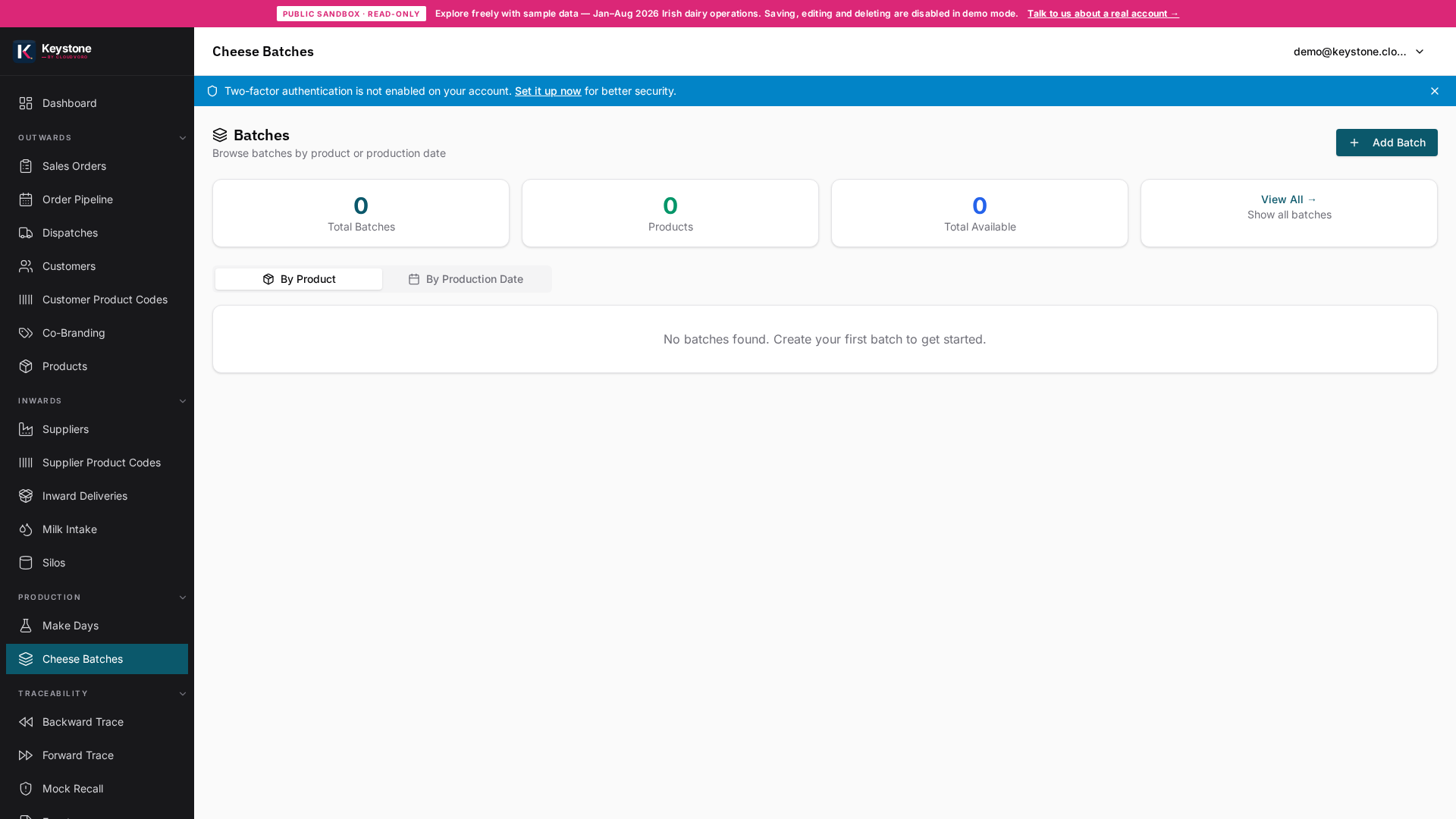
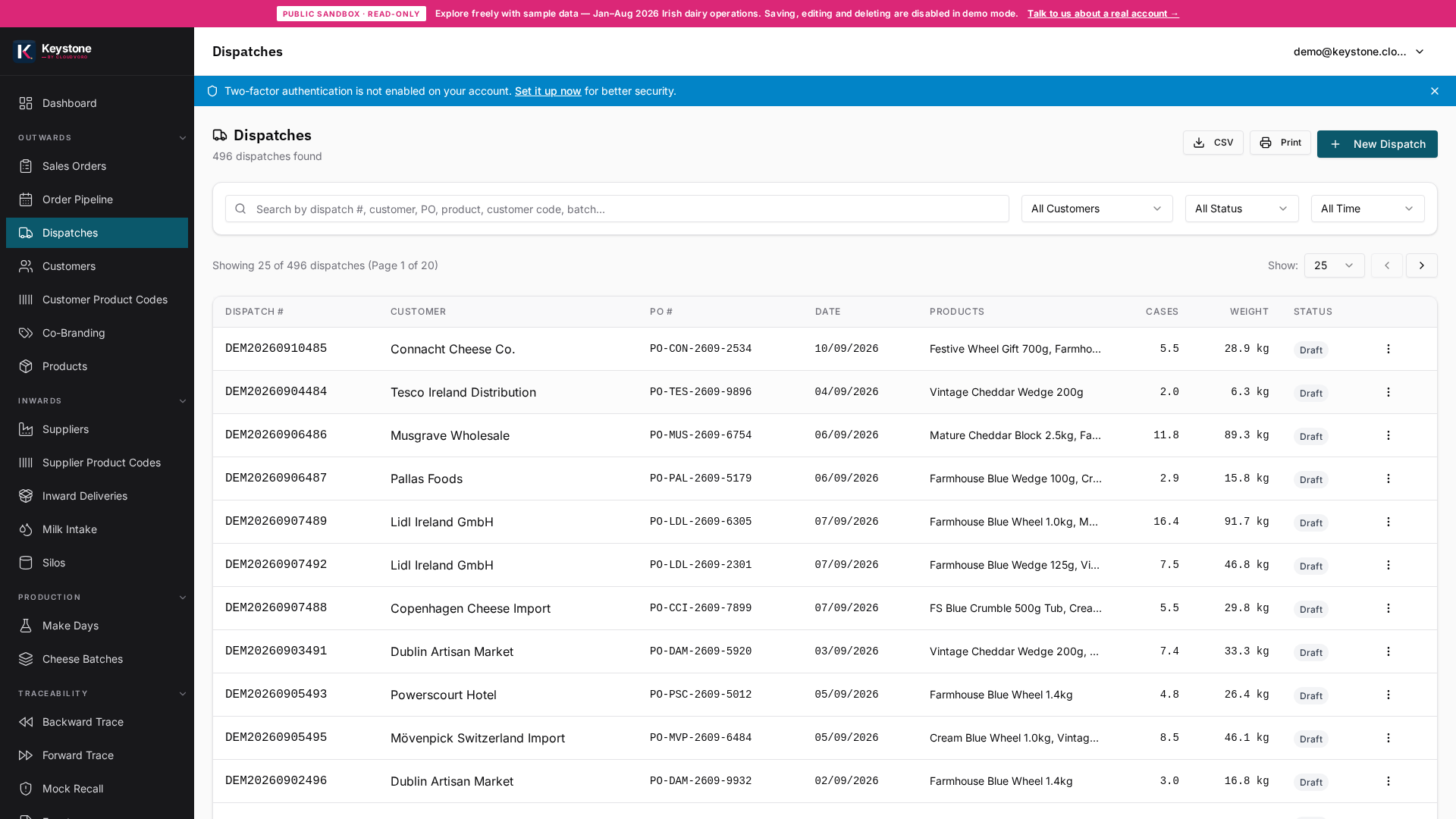
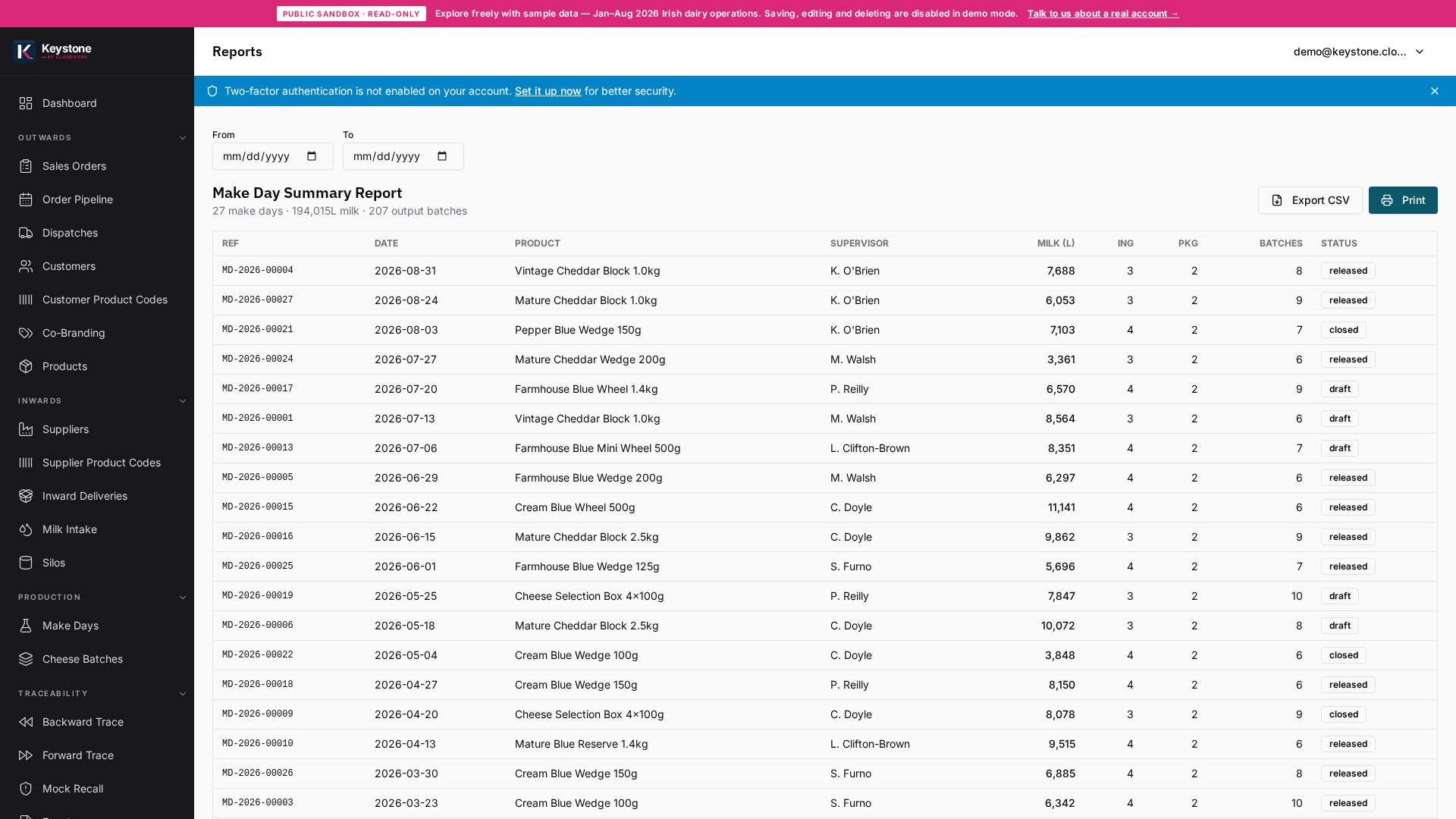
Catch data must survive your process.
Consumer-information rules for fishery products (EU Reg. 1379/2013) put catch area, production method and species identity on labels, and business-to-business paperwork must carry the lot identification behind them. The operational challenge is that this data arrives at intake and must still be correct after the fish has been filleted Monday, brined Tuesday and smoked Wednesday. Keystone attaches the catch/consignment attributes to the intake lot; transformations inherit lineage, so the pack dispatched on Friday still knows exactly which landing it came from, and proves it in one signed PDF.
From the quay to the multiple.
Processing traceability, not catch certificates or quota systems.
Keystone is the processing-side traceability, QC and dispatch layer: it holds and evidences the chain from intake to customer. It does not replace catch certification, quota or vessel-reporting systems, it consumes their references at intake and keeps them attached to everything you make. Built with an Irish farmhouse producer as founding partner; the intake-attributes and transformation model fits seafood processing directly.
Related pages on this stack.
Questions buyers actually ask.
Can intake lots carry catch area and production method?
How do you handle processing yield losses?
Does this satisfy an SFPA inspection?
Mixed business, fresh counter plus wholesale?
How long to go live?
Ready to see if Keystone fits your floor?
20-minute discovery call. No sales pitch. Written scope within 48 hours if we fit, referral to someone better if we don't.
Talk to us