Áruátvétel szoftver: ahol a nyomonkövetés valóban elkezdődik.
Minden visszakövetés végül egy beérkezési nyilvántartásnál ér véget.
Minden visszafelé követés, minden tömeg-összeegyeztetés és minden beszállítói visszahívás ugyanott ér véget: a beérkezési nyilvántartásnál. Ha az áruátvétel egy másolatfüzet, amelyre reggel 7-kor annyi van írva, hogy „liszt x 20”, az utólagos folyamatok is ezt a hiányt öröklik. A Keystone a tételszintű átvételt szállítmányonként kevesebb mint egy perces műveletté teszi — szállító, tételkód, mennyiség, dátumok, COA, ellenőrzések rögzítve — így minden későbbi folyamat a pontosságot örökli.
- Beérkezés szállítói tételenként: kód, mennyiség, dátumok, szállítói sablonokkal.
- A COA-k és megfelelőségi dokumentumok a hozzájuk tartozó szállítmányhoz csatolva.
- Átvételi ellenőrzések (hőmérséklet, állapot, maradékállapot) rögzítve az áruátvételnél.
- Minden tétel automatikusan kapcsolódik a szállítmányokhoz, amelyekből származik.
Real screens, from our Public Sandbox.
Every screenshot below is captured from the Public Sandbox demo tenant with sample Irish dairy data. No mockups, no client data, no NDAs.
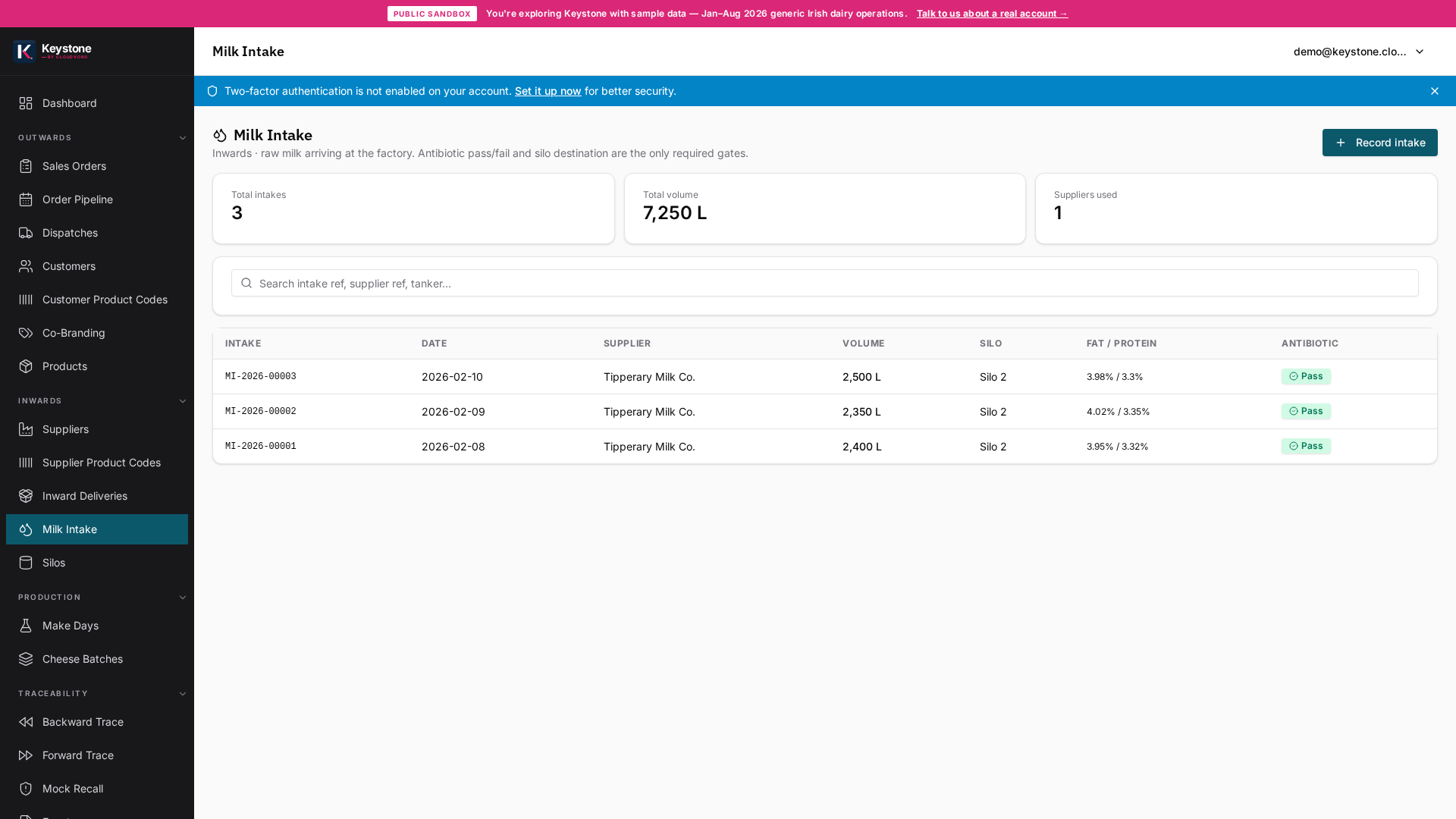
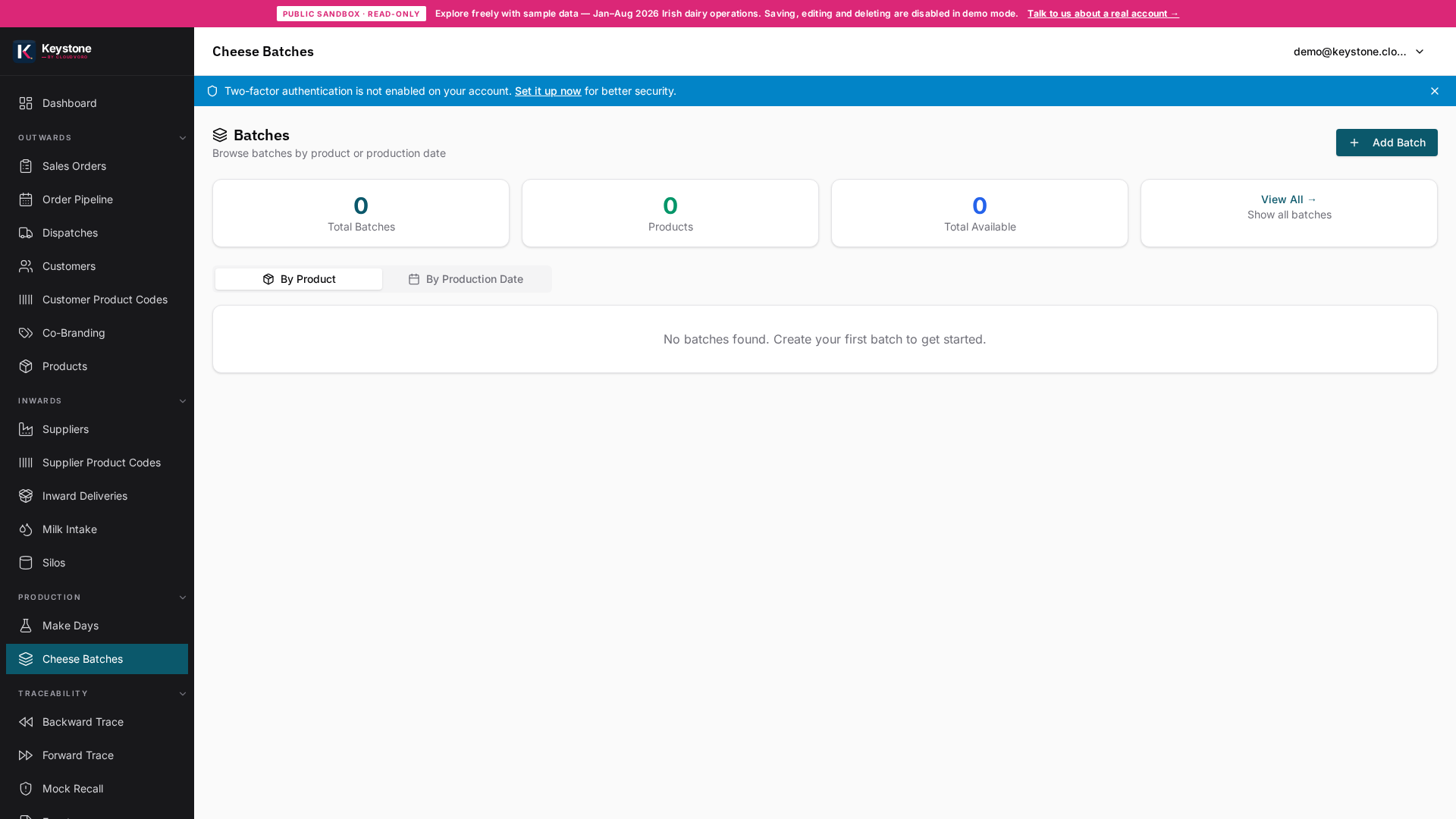
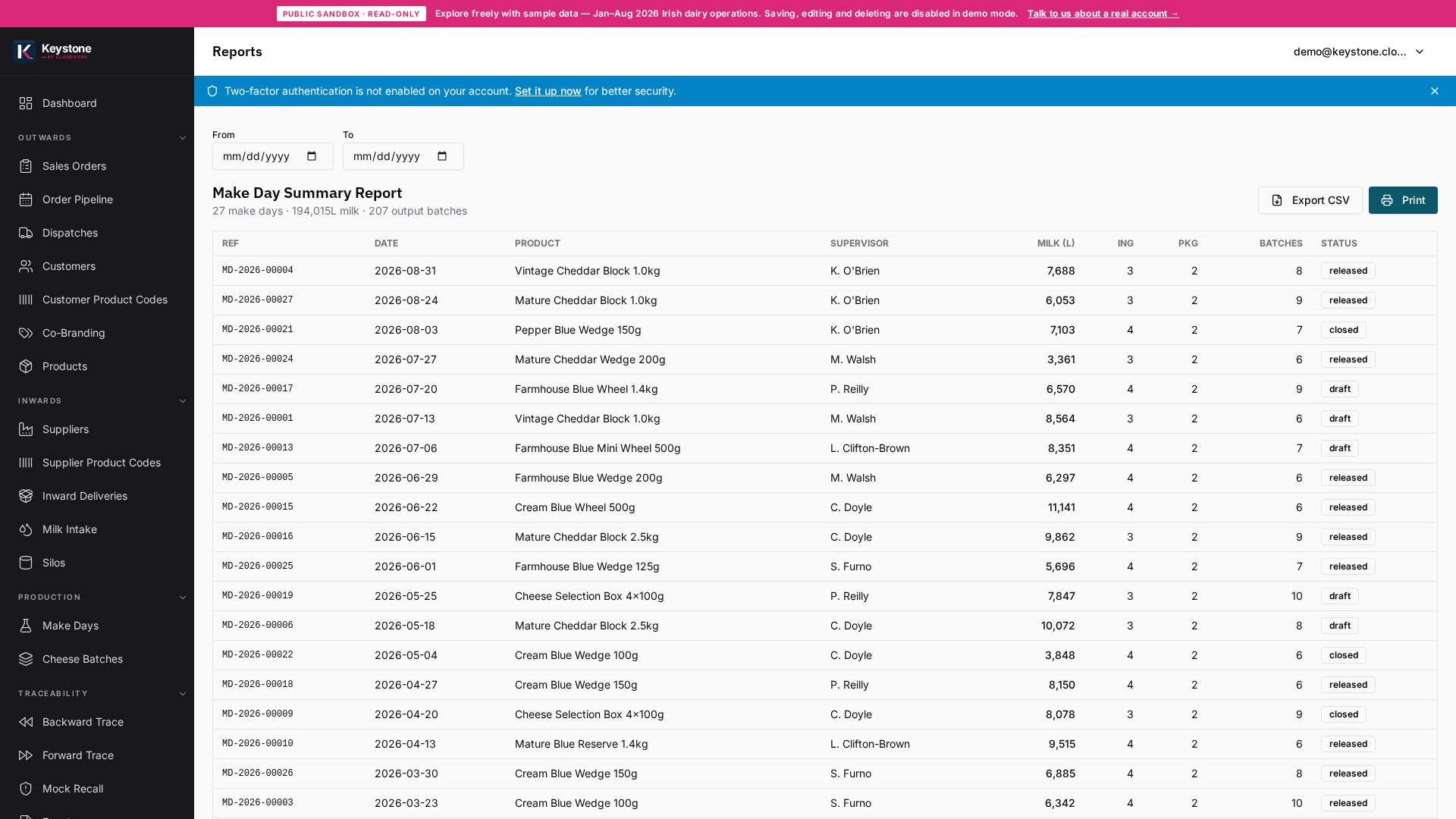
Az auditok visszafelé követik a folyamatot — az áruátvételnél érnek célba.
A vertikális audit mindig ugyanígy végződik: az auditor visszaköveti a tételt a nyersanyagokig, és kéri az áruátvételi bizonyítékot — melyik szállítói tétel, mikor érkezett, hogyan ellenőrizték, hol a COA? Olyan telephelyek, amelyeknek erősek a gyártási nyilvántartásaik, de gyengék az áruátvételi jegyzőkönyveik, itt elbuknak, mert a tételszintű követelmények (BRCGS §3.5, beszállító jóváhagyás és nyersanyag-átvétel) a beérkezési nyilvántartás valóságát feltételezik. A megoldás nem hősies fegyelem; hanem az, hogy olcsóbbá tesszük a jó rögzítést, mint a megkerülést: szállítónként sablonozott áruátvételi képernyők, ahol egy rendszeres szállítmány rögzítése három koppintás és egy tételkód.
Egy perc az átvételnél órákat spórol mindenhol máshol.
A bevételezés szigorúsága teszi lehetővé a 30 másodperces visszakövetést.
A Keystone fő üzenete — a teljes lánc kevesebb mint 30 másodperc alatt — valójában egy bevételezési történet: mivel a szállítások tételszintű nyilvántartások, a gyártási tételek automatikusan kapcsolódnak hozzájuk, és a visszafelé történő visszakövetésnek valódi pontja van. Ugyanazok a rekordok támasztják alá a tömegegyeztetést (beérkezett vs. felhasznált vs. készlet) és a beszállítói teljesítmény-összesítőket (elutasítások, hőmérsékleti hibák, dokumentumhiányok beszállítónként, kiegészítő menedzsmentadatok). A bevételezés szerepel az alaplicencben; ez az egész rendszer bejárata.
Related pages on this stack.
Kérdések, amiket a vásárlók tényleg feltesznek.
Mennyi ideig tart egy szállítás bevételezése?
Megakadályozhatja-e egy sikertelen bevételezési ellenőrzés, hogy egy tételt felhasználjanak a gyártásban?
Kezelnek többtermékes, több tételből álló szállítmányokat?
Mi a helyzet a tejjel vagy nagy volumenű folyadékbevételezéssel?
Beimportálhatjuk a beszállítói listát és a termékspecifikációkat?
Szeretné megtudni, illik‑e a Keystone az Ön gyárába?
20 perces ismerkedő hívás. Nincs értékesítési beszéd. Ha illünk egymáshoz, 48 órán belül írásos hatókört küldünk; ha nem, ajánlunk valakit, aki jobban megfelel.
Lépjen kapcsolatba velünk