Tételszintű nyomonkövetés élelmiszer nagykereskedőknek.
Minden beszállítói tétel nyomon követve minden ügyfélhez történő kiszállításig.
A nagykereskedők minden visszahívás központjában állnak: ha egy gyártói tétel meghibásodik, a hatóságok és a gyártó ugyanazzal a kérdéssel fordulnak önhöz — ki kapta meg, mennyi volt és mikor? Az EU élelmiszerbiztonsági előírásainak Article 18 szerint köteles erre válaszolni. A Keystone a beérkezéseket beszállítói tételenként, a kiszállításokat pedig tételsor szinten rögzíti, így a válasz egy 30 másodperces lekérdezés lesz, nem egy éjszaka a szállítólevél-archívumban.
- Beérkezés beszállítói tételenként: gyártó, tételkód, dátumok, mennyiségek
- Minden kiszállítási tételsor tartalmazza a kiszállított tételt, beleértve a részre osztott raklapokat is.
- Visszahívás hatóköre másodpercek alatt: válasszon beszállítói tételt, és azonnal láthatja az összes ügyfelet és mennyiséget.
- FEFO elv: a rövid lejáratú tételek előtérbe kerülnek, mielőtt kiszállítanák vagy megromlanának.
Real screens, from our Public Sandbox.
Every screenshot below is captured from the Public Sandbox demo tenant with sample Irish dairy data. No mockups, no client data, no NDAs.
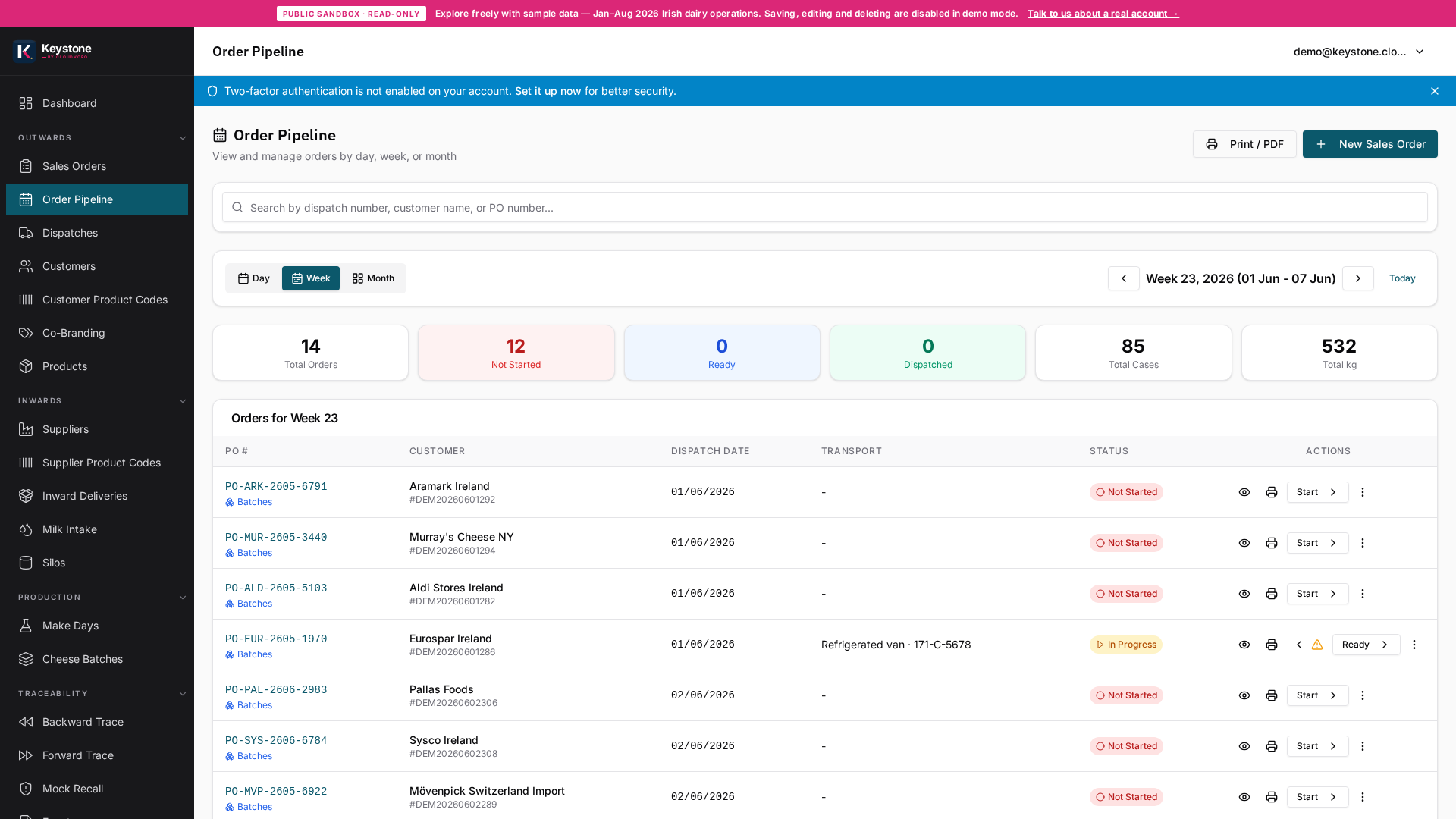
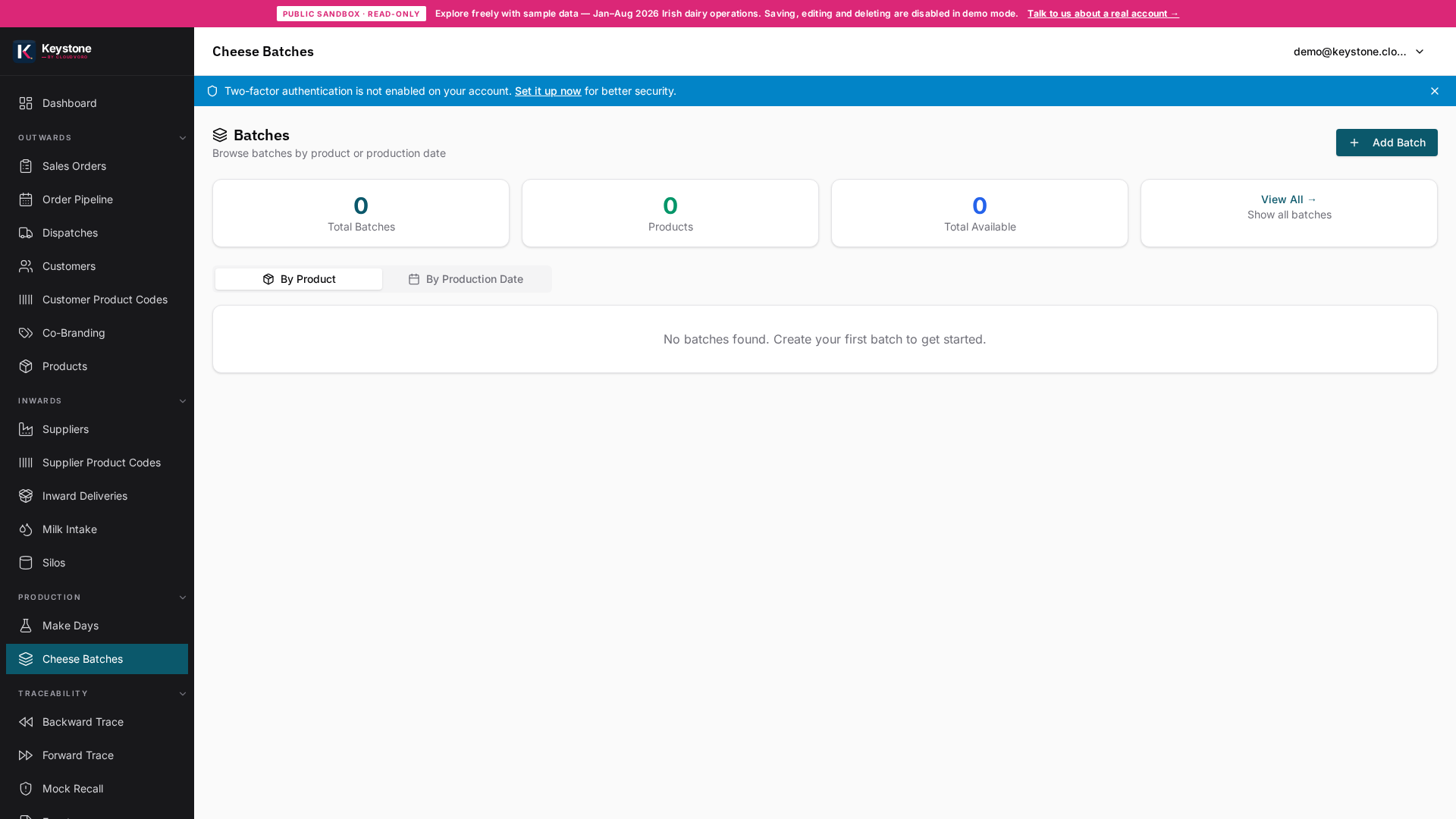
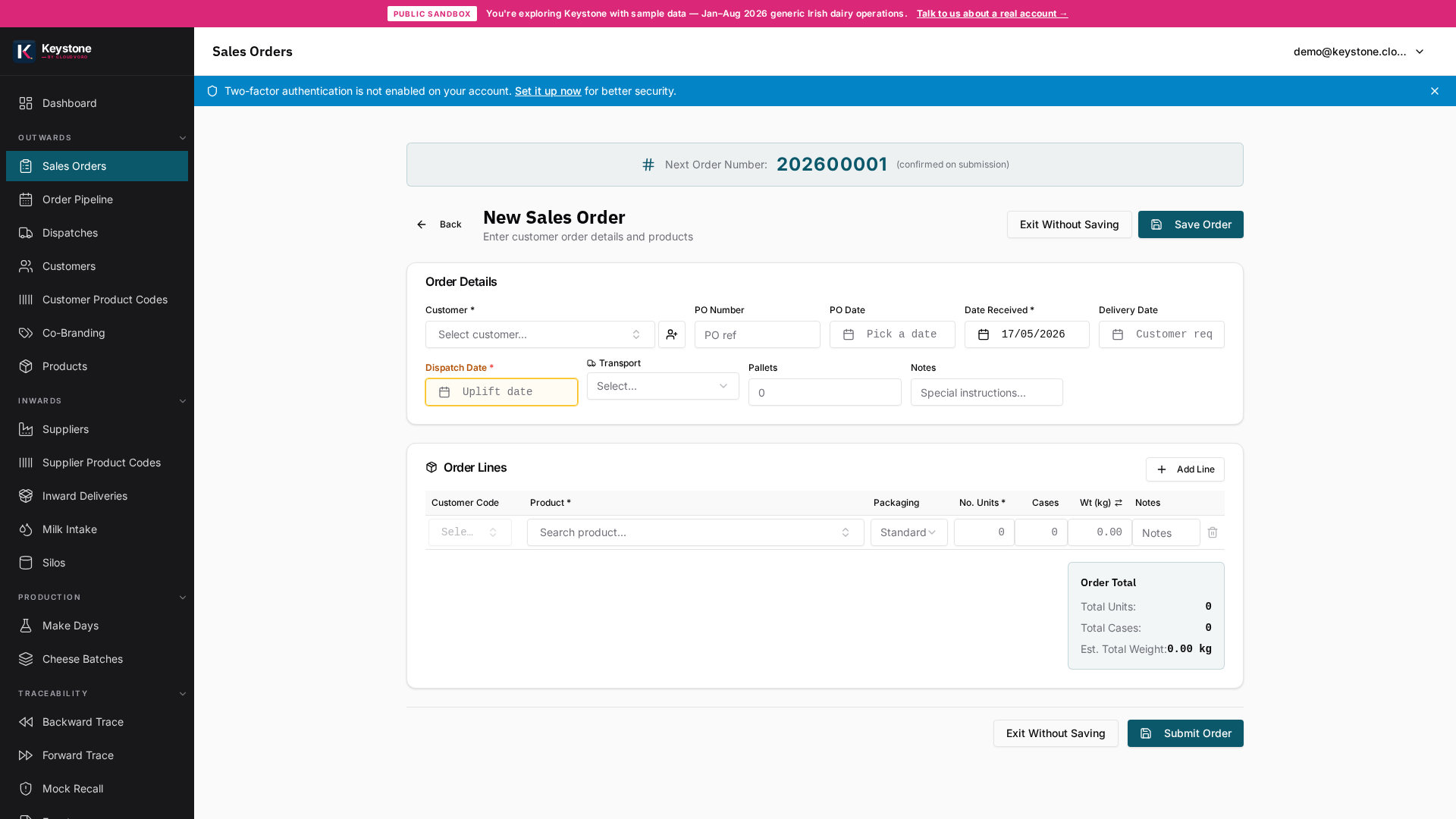
Ön nem követett el hibát, mégis Ön viseli a visszahívás terhét.
A nagykereskedő nyomonkövetési kockázata aszimmetrikus: nem Ön gyártja a terméket, de ha visszahívás történik, Önnek kell gyorsan, pontosan és dokumentáltan felmérnie a forgalmazást. Ha a nyilvántartásai termékszintűek, de nem tételszintűek, a visszahívás kiterjedése automatikusan „minden, amit az adott gyártótól eladtunk” lesz, és a nyilvántartási hiány miatti költség a vevői polcokon jelentkezik. A tételszintű beérkezés és tételszintű kiszállítás pontosan arra korlátozza a hatókört, ami érintett — gyakran ez a különbség három ügyfél értesítése és háromszáz értesítése között.
Nagykereskedelmi munkafolyamat, zökkenőmentesen.
Egy lépés vissza, egy lépés előre — bizonyítékokkal alátámasztva, nem feltételezéseken alapulva.
A jogi minimum egy nagykereskedő számára az, hogy egy lépés visszafelé (melyik termelő, melyik tétel) és egy lépés előre (mely üzleti vevők) nyomon követhető legyen, és a hatóságok számára kérésre hozzáférhető. A kiskereskedelmi vevők és a BRCGS Storage & Distribution típusú auditok ennél többet követelnek: időre végzett gyakorlatok, mennyiségi egyeztetések, dokumentált eljárások. A Keystone nyilvántartásai eleve kielégítik a jogi minimumot, és az audit réteget egyszerű kereséssé alakítják. Olvassa el közérthető útmutatónkat arról, mit ír elő valójában az EU-s jog, és többé ne kelljen ezzel foglalkoznia.
Related pages on this stack.
Kérdések, amiket a vásárlók tényleg feltesznek.
Több mint 2000 SKU-t kezelünk — megvalósítható a tételszintű nyomonkövetés?
Mi a helyzet azzal a termékkel, amit újracímkézünk vagy átcsomagolunk?
Kaphatnak a termelők vagy a hatóságok közvetlenül jelentéseket?
Szükségünk van erre, ha az ERP rendszerünk már nyomon követi a készletet?
Mennyi idő alatt élesedik?
Szeretné megtudni, illik‑e a Keystone az Ön gyárába?
20 perces ismerkedő hívás. Nincs értékesítési beszéd. Ha illünk egymáshoz, 48 órán belül írásos hatókört küldünk; ha nem, ajánlunk valakit, aki jobban megfelel.
Lépjen kapcsolatba velünk