Hús nyomonkövető szoftver feldolgozók és vágóüzemek számára.
Beérkezés → félkész → csomagolás → vásárló, papírhegy nélkül.
A hús viseli a legnagyobb nyomonkövetési terhet az élelmiszeriparban: a marhaazonosításra vonatkozó jogszabályi követelmények, engedélyszám-kötelezettségek, vágás dátuma és a tétel-szigor, valamint olyan kiskereskedők, amelyek szigorúan auditálnak, mert az ágazat történelme megköveteli. Az operatív kihívás az átalakítás: egy beérkező törzs vagy nagy alapdarab több termékké alakul több napon keresztül. A Keystone natív módon modellezi az átalakulást, így a tételazonosság megmarad a felvágás, darálás, pácolás és csomagolás során.
- Beérkezési nyilvántartások — beszállítói tétel, levágásra vonatkozó hivatkozások és mennyiségek
- Átalakulások: egy bemeneti tétel → sok kimenet (primalok, trim, darálék) egyeztethető súlyokkal
- Előre irányuló nyomonkövetés bármely beérkezési tételtől minden csomagig és vásárlóig
- Tételkódolt szállítólevelek és címkék kiskereskedői formátumban
Real screens, from our Public Sandbox.
Every screenshot below is captured from the Public Sandbox demo tenant with sample Irish dairy data. No mockups, no client data, no NDAs.
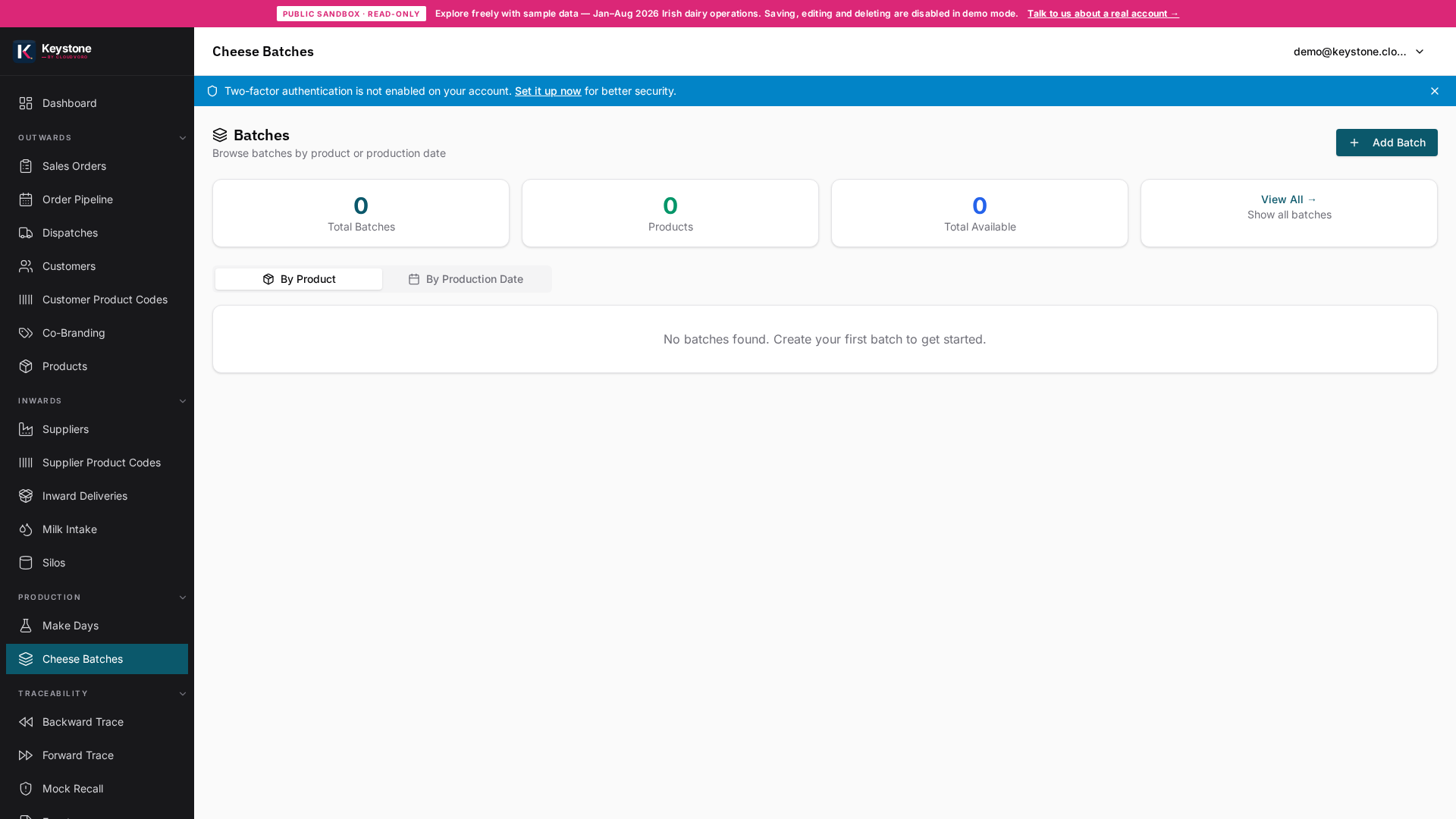
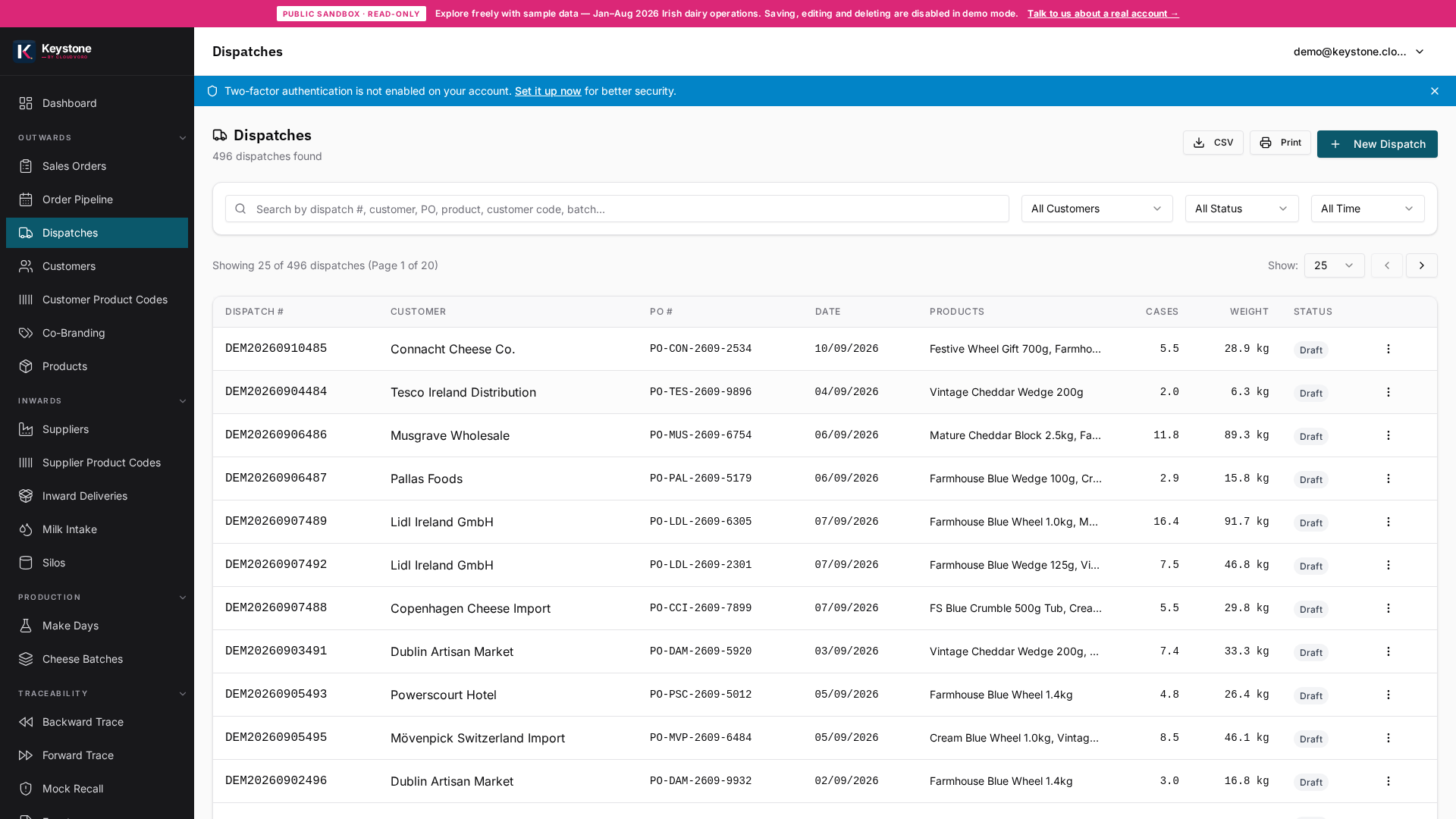
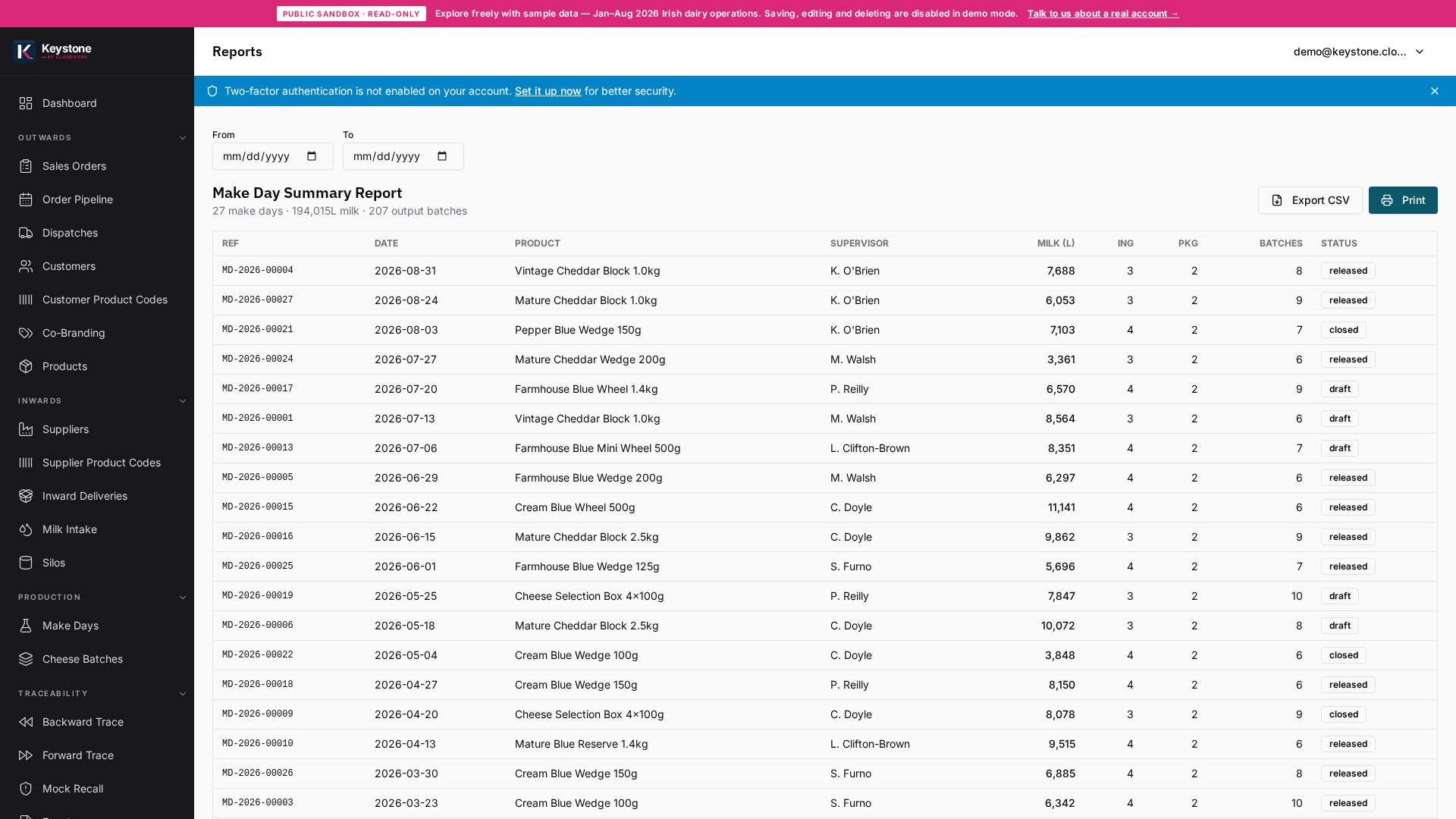
Az átalakulás az a pont, ahol a hús nyomonkövetése megreked.
Egy táblázat követni tud egy sajttételt, amely végig egy dolog marad. Egy marhafél azonban nem marad egy darab: lesz belőle bélszín, darált hús, húspogácsa-trimm, csont alaplének — mindegyik más napokon dolgozva és különböző vevőknek kiszállítva. A Keystone átalakítási modellje minden vágási vagy feldolgozási lépést kapcsolódásként rögzít: bemeneti tételek a bekerülő súlyokkal, kimeneti tételek a kimenő súlyokkal. A hozam lépésenként látható, a tömegmérleg minden lépésnél zár, és a nyomonkövetés előre és vissza végig megmarad a teljes fában, egyetlen átviteli tételtől minden egyes kiskereskedelmi csomagig, vagy visszafelé egy vevőpanasztól az eredeti átvételi tételig.
Azokra az igazolásokra építve, amelyeket a húsvállalkozásoknak bizonyítaniuk kell.
Húsfeldolgozók és bontóüzemek — nem teljes vágóhídi megfelelőségi csomagok.
A Keystone a tételszintű nyomonkövetés, minőségellenőrzés és kiszállítási réteg húsfeldolgozók, bontóüzemek és hentestermelő vállalkozások számára, amelyek kiskereskedelemnek és vendéglátásnak szállítanak. Nem vágóhídi vágósor-rendszer vagy mozgási engedélyező platform; az átvétel után helyezkedik el, és tárolja azt a tételláncot, amelyre az auditok és a vevői kérdések hivatkoznak. Alapító partnerünk egy ír családi tejüzem; az átalakítási modell általánosra készült, mert minden tételtermelő előbb-utóbb bont, kever vagy átdolgoz tételeket.
Related pages on this stack.
Kérdések, amiket a vásárlók tényleg feltesznek.
Átalakulhat-e egy bevételi tétel több termékké?
Kezeli a változó súlyokat?
Nyomon követhetjük-e a levágás dátumát vagy az állományazonosítót?
Ez egy vágóhídi rendszer?
Mit kapnak az auditok?
Szeretné megtudni, illik‑e a Keystone az Ön gyárába?
20 perces ismerkedő hívás. Nincs értékesítési beszéd. Ha illünk egymáshoz, 48 órán belül írásos hatókört küldünk; ha nem, ajánlunk valakit, aki jobban megfelel.
Lépjen kapcsolatba velünk