Etykiety palet, które skanują się poprawnie za pierwszym razem.
SSCC. GS1-128. Warianty na paletę. Projektowane w systemie.
Skanery detalistów nie mają litości. Jeśli GS1-128 nie da się zdekodować, SSCC ma zły format lub EAN jest na złym wierszu, paleta zostaje odrzucona przy dokach i spędzasz godzinę na telefonie. Keystone traktuje etykiety paletowe jako artefakt produkcyjny najwyższej rangi — projektowane w systemie, testowo skanowane przed drukiem i przypisywane do rzeczywistej partii i pozycji wysyłkowej.
- Wbudowane standardy SSCC i GS1-128
- Warianty na paletę, na opakowanie i na pozycję wysyłkową — projektowane w kreatorze w aplikacji.
- Rejestr audytu przy każdym wydruku etykiety: kto, kiedy i do której wysyłki.
- Szablony dla detalistów: Tesco, Lidl, M&S, SuperValu, Centra, SPAR, Musgrave
Real screens, from our Public Sandbox.
Every screenshot below is captured from the Public Sandbox demo tenant with sample Irish dairy data. No mockups, no client data, no NDAs.
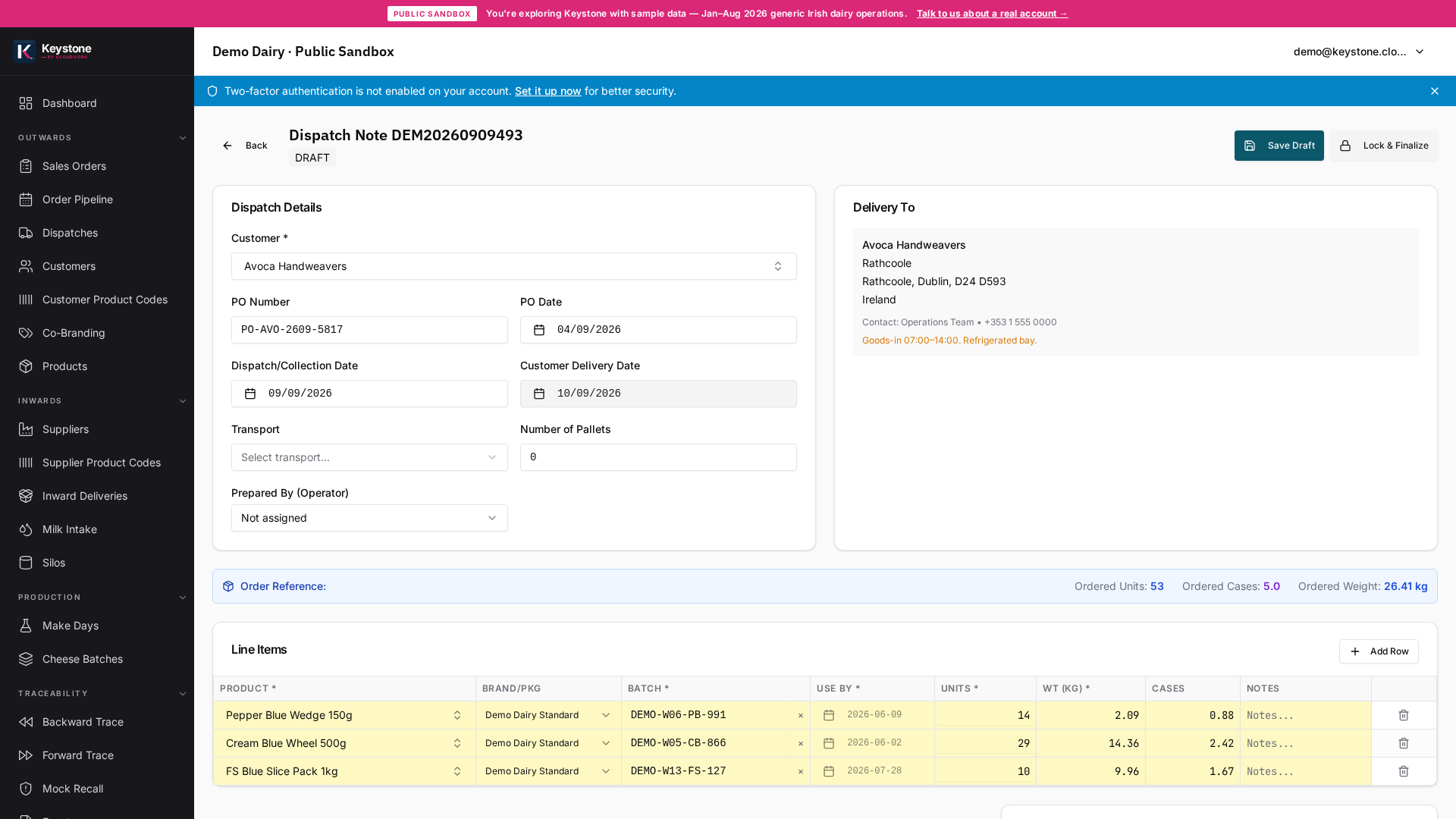
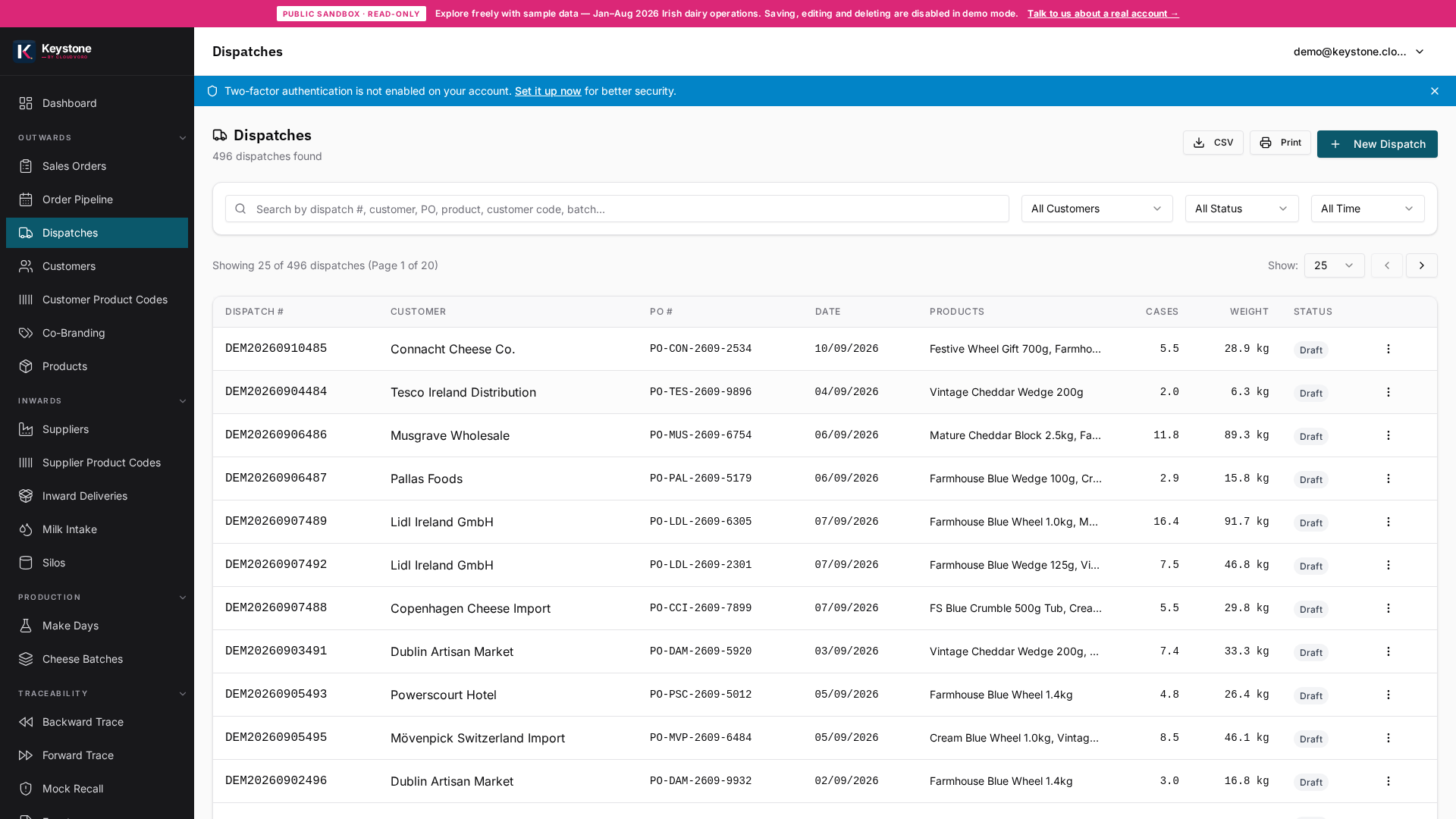
Każdy detalista traktuje swoje wymagania dotyczące etykiet jako ostateczne.
Tesco oczekuje innego układu SSCC niż Lidl. M&S chce, aby numer SKU klienta był większy niż twój wewnętrzny kod. SuperValu wymaga numeru przesyłki nad linią z numerem partii. Żadne z tego nie jest uwzględnione w standardowej specyfikacji ERP — każdą regułę odkrywasz dopiero po odrzuceniu palety. Keystone dostarczany jest z gotowymi szablonami specyficznymi dla detalistów, skonfigurowanymi i dopracowanymi na podstawie rzeczywistej produkcji u naszego partnera założyciela.
Edytor WYSIWYG z predefiniowanymi szablonami dla detalistów.
Warstwa operacyjna, finanse bez zmian.
Etykiety paletowe są częścią operacji. Keystone nimi zarządza — generowane z poziomu wysyłki, powiązane z rzeczywistymi partiami i drukowane lokalnie na Państwa drukarce etykiet. Państwa system księgowy nadal obsługuje księgowość. Brak podwójnego wprowadzania, brak kroku pośredniego w Excelu, brak ręcznego licznika SSCC.
Related pages on this stack.
Pytania, które rzeczywiście zadają kupujący.
Czy obsługujecie Państwo drukarki etykiet Zebra i SATO?
A co z licznikiem SSCC, który musi być globalnie unikalny?
Czy jedna wysyłka może korzystać z wielu szablonów etykiet?
Czy personel wysyłkowy może samodzielnie projektować etykiety?
Co się stanie, jeśli etykieta zostanie źle wydrukowana?
Chcesz sprawdzić, czy Keystone sprawdzi się w Twoim zakładzie produkcyjnym?
20‑minutowa rozmowa wstępna. Bez prób sprzedaży. Pisemny zakres w ciągu 48 godzin, jeśli się dopasujemy; jeśli nie — skierujemy do bardziej odpowiedniego partnera.
Skontaktuj się z nami