GS1-128- und SSCC-Etiketten auf Basis echter Chargendaten.
Der Barcode ist einfach. Die Daten dahinter sind das Produkt.
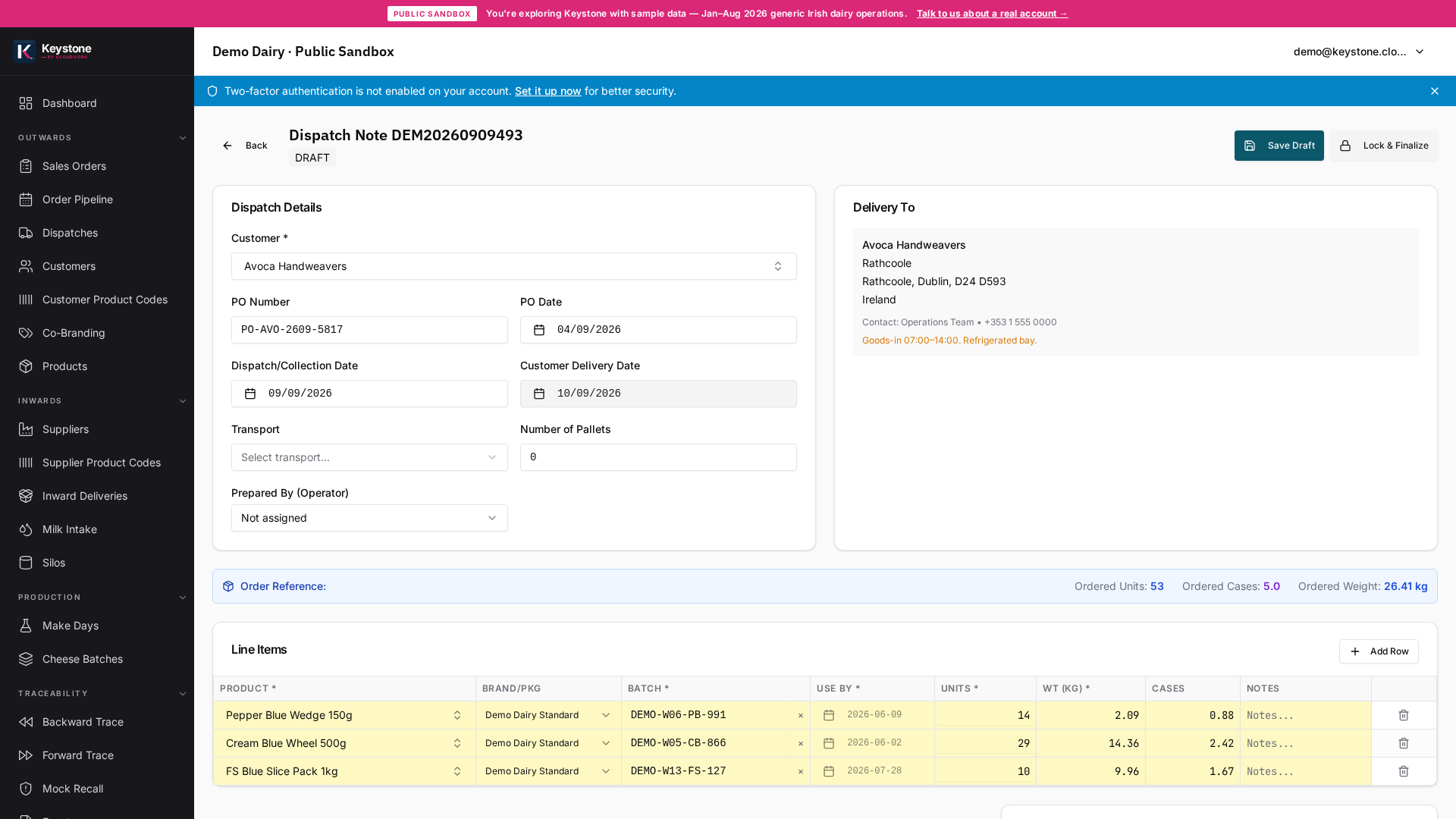
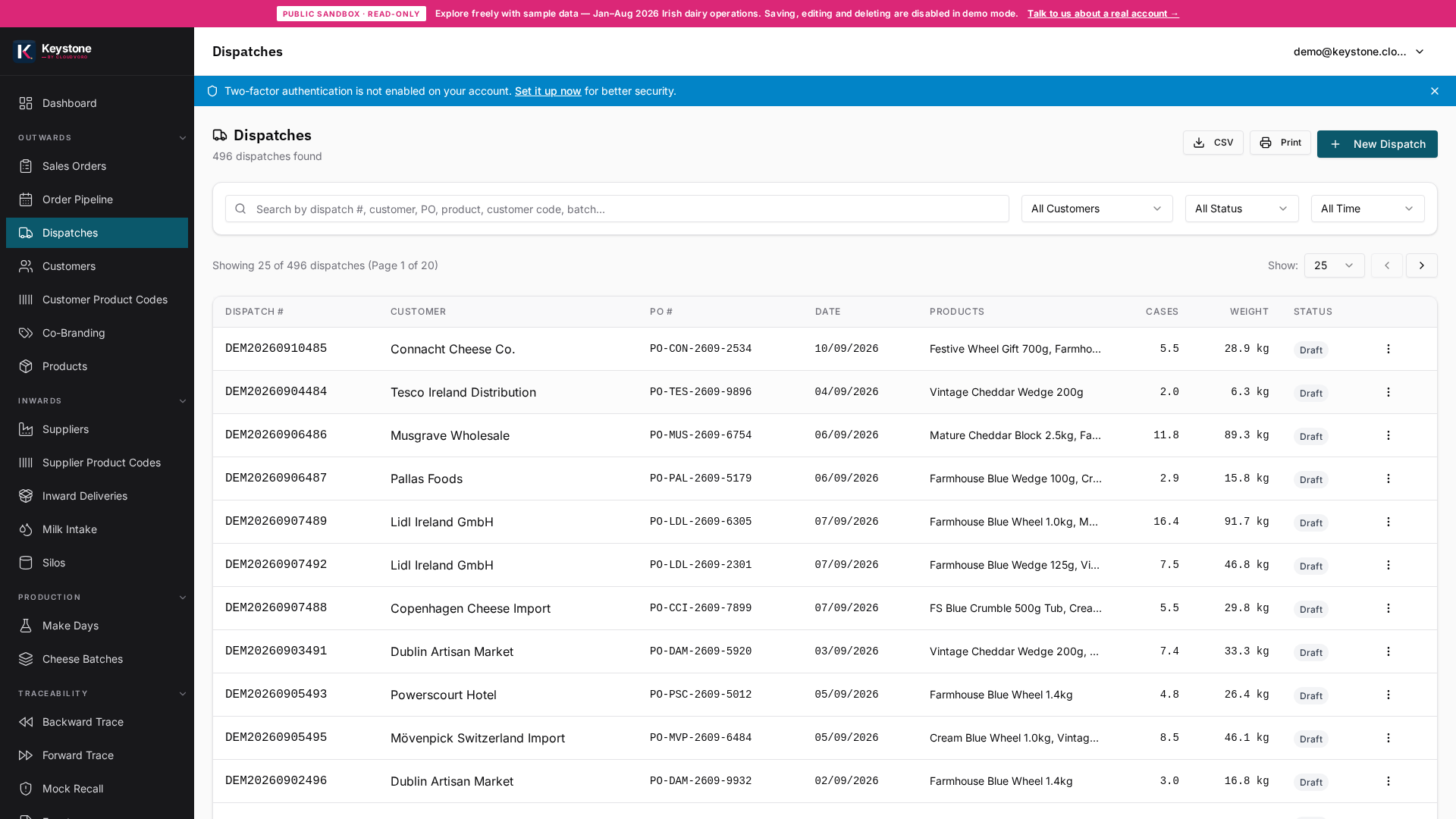
Jedes Etikettentool kann einen GS1-128-Barcode zeichnen. Die Herausforderung ist, was der Barcode aussagt: GTIN, Charge im AI(10), Datumsangaben, SSCC-Seriennummer – alles muss mit der physischen Palette und Ihren Versanddokumenten übereinstimmen, jedes Mal. Keystone erzeugt Karton‑ und Palettenetiketten aus denselben Datensätzen, die auch Ihre Versanddokumente steuern, sodass Etikett, Palette und Papiere nicht unterschiedlich sein können.
- SSCC-Seriennummern werden pro Palette erzeugt und nachverfolgt, ohne Wiederverwendung, mit vollständiger Historie.
- GS1-128 mit den von Händlern erwarteten Application Identifiers: GTIN, Charge/Los (AI(10)), Datumsangaben (AI(15/17)), Gewicht.
- Etikettendaten stammen direkt aus dem Versanddatensatz – kein Nachtippen, keine Abweichungen.
- In der App gestaltet, vor dem ersten Live‑Versand mit echten Scannern getestet.
Real screens, from our Public Sandbox.
Every screenshot below is captured from the Public Sandbox demo tenant with sample Irish dairy data. No mockups, no client data, no NDAs.
Zurückweisungen beruhen auf Dateninkonsistenzen, nicht auf Druckqualität.
Wenn ein Händlerdepot eine Palette zurückweist, liegt es selten an der Druckdichte des Barcodes – es sind die Daten: ein SSCC, das eine frühere Lieferung dupliziert; eine Chargennummer auf dem Etikett, die von der Versandnotiz abweicht; oder ein Datumsformat, das das System des Depots nicht verarbeiten kann. Das sind typische Folgen von Etiketten, die in einem separaten Tool und mit separaten Eingaben erzeugt wurden. Bei Keystone werden die Etiketten direkt aus dem Versanddatensatz erstellt: Die Charge ist die Charge, die tatsächlich auf der Palette ist, das SSCC wird einmalig aus einer nachverfolgten Sequenz vergeben, und die Versandnotiz nennt dieselben Identifikatoren, weil es sich um dieselben Daten handelt.
Die vollständige Ebene für Karton‑ und Palettenetikettierung.
Sie liefern das GS1‑Präfix; wir sorgen dafür, dass es funktioniert.
Sie benötigen Ihr eigenes GS1‑Unternehmenspräfix (über GS1 Ireland oder GS1 UK) — das ist eine Mitgliedschaft, keine Software. Keystone nutzt dieses Präfix: GTIN‑Zuweisungsdaten, SSCC‑Sequenzen und die Etikettenerstellung werden dann in der App verwaltet, und wir testen mit echten Scannern während der Implementierung, bevor etwas versandt wird. Die Etikettierung ist Teil der Standardlizenz und kein kostenpflichtiges Zusatzmodul.
Related pages on this stack.
Fragen, die Einkäufer tatsächlich stellen.
Brauche ich eine GS1‑Mitgliedschaft?
Welche Application Identifiers (AIs) werden unterstützt?
Können Etiketten gemischte Paletten abbilden?
Welche Drucker werden unterstützt?
Ist dies ein separates Modul oder mit zusätzlichen Kosten verbunden?
Bereit herauszufinden, ob Keystone zu Ihrer Produktion passt?
20‑minütiges Kennenlerngespräch. Kein Verkaufsgespräch. Schriftlicher Leistungsumfang innerhalb von 48 Stunden, falls wir zueinander passen; andernfalls Empfehlung an einen geeigneteren Anbieter.
Kontaktieren Sie uns