Oprogramowanie do śledzenia partii dla piekarni hurtowych i rzemieślniczych.
Od partii mąki, przez gotowy bochenek, aż do klienta — w jednym łańcuchu.
Problem z identyfikowalnością w piekarni to tempo i wolumen: dziesiątki SKU, codzienne partie produkcyjne, krótki termin przydatności oraz lista alergenów obejmująca prawie każdą linię. Gdy pojawi się wycofanie mąki lub alert o niezgłoszonym alergenie, masz godziny, by wskazać każdy dotknięty wypiek i każdego klienta, który go otrzymał. Keystone przechowuje ten łańcuch jako jeden spójny rekord — dostawa dostawcy → mieszanka/partia → linia wysyłkowa → klient — dzięki czemu odpowiedź zajmuje 30 sekund, a nie całą noc w biurze.
- Śledzenie wsteczne: dowolny wysłany produkt → partia → partie mąki, nasion i polepszacza → dostawcy
- Śledzenie w przód: każda dostawa składnika → każdy wypiek, w którym użyto tego składnika → każdy klient, z ilościami
- Rejestry krytyczne dla alergenów: każda partia zawiera wersję receptury i listę partii składników
- Przyjazne codziennej wysyłce: kody partii przepływają do dokumentów wysyłkowych i etykiet bez ręcznego przepisywania
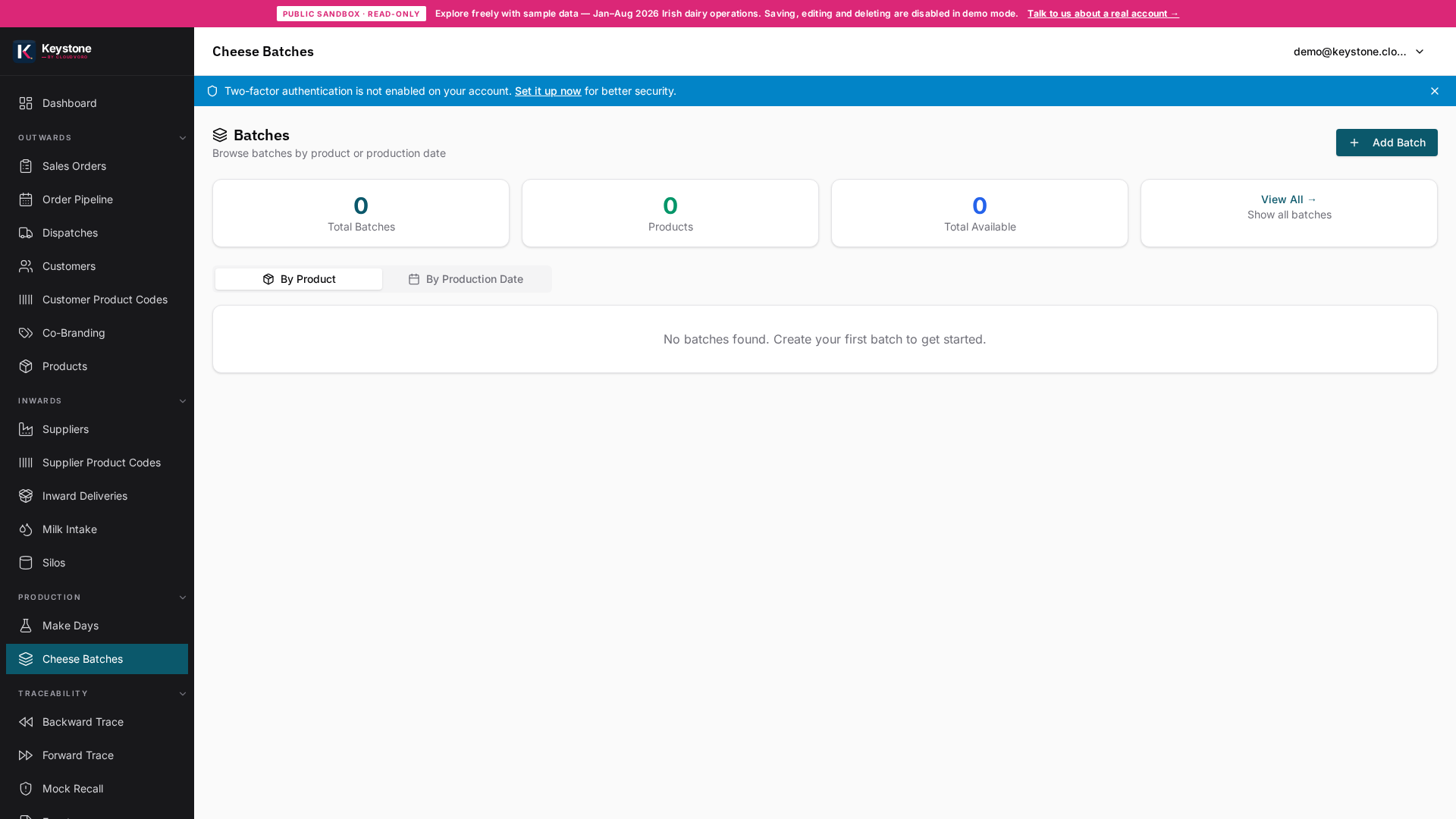
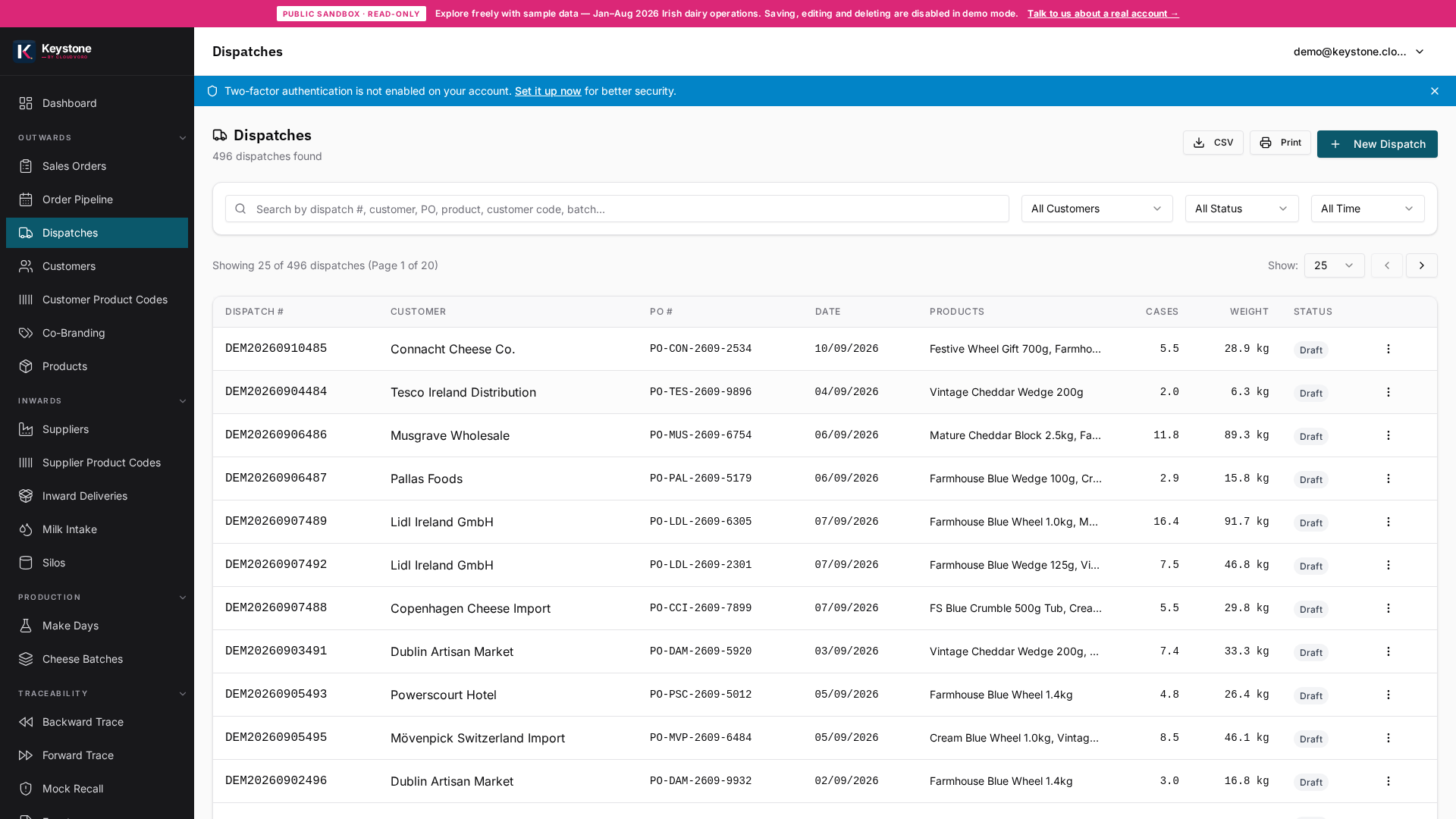
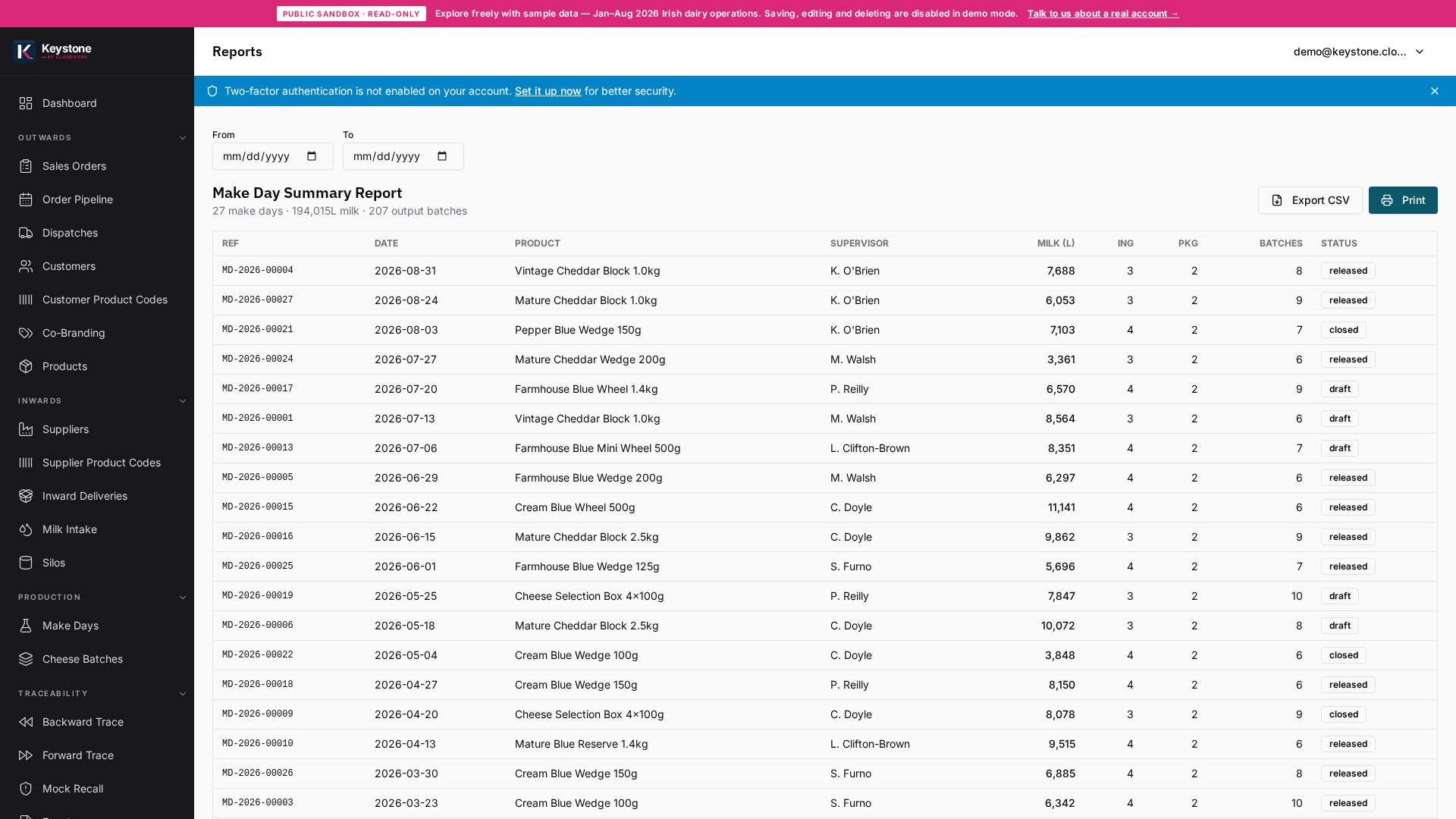
Real screens, from our Public Sandbox.
Every screenshot below is captured from the Public Sandbox demo tenant with sample Irish dairy data. No mockups, no client data, no NDAs.
Codzienna produkcja łamie tygodniowe arkusze kalkulacyjne.
Większość arkuszy śledzenia została zaprojektowana wokół cotygodniowych partii. Piekarnia produkuje codziennie, czasem dwa razy dziennie — zapisy mnożą się siedem razy szybciej, błędy przy ręcznym przepisywaniu się kumulują, a osoba utrzymująca arkusz staje się pojedynczym punktem awarii. Alerty dotyczące mąki to dobry przykład: gdy młyn informuje o partii, pytanie brzmi, które mieszanki korzystały z tej partii w ciągu ostatnich N dni i które sklepy, hurtownie oraz detaliści otrzymali te wypieki. W Keystone dostawa mąki jest rekordem pierwszej klasy; każda mieszanka, która z niej korzystała, jest powiązana automatycznie, a śledzenie do klientów to jedno kliknięcie.
Sytuacje brzegowe, które rzeczywiście pojawiają się w piekarniach.
SALSA, BRCGS czy audyt detalisty — te same dowody, gotowe.
Czy twoi klienci wymagają SALSA (popularne w rzemieślniczych i regionalnych piekarniach), czy BRCGS (domyślny standard sieci przy markach własnych), dowody śledzenia mają ten sam kształt: zapisy na poziomie partii w obie strony, coroczny test w określonym czasie oraz bilans masowy, który się domyka. Keystone generuje łańcuch i ilości na podstawie bieżących zapisów, dzięki czemu ćwiczenie śledzenia staje się zadaniem dokumentacyjnym zamiast projektu rekonstrukcyjnego. Keystone został zbudowany przy udziale irlandzkiego producenta gospodarczego jako partnera założyciela; model partii ma zastosowanie do każdej produkcji partiowej, a procesy piekarnicze (codzienne produkcje, mieszanki wieloskładnikowe, wycofania z powodu alergenów) mapują się bezpośrednio na system.
Related pages on this stack.
Pytania, które rzeczywiście zadają kupujący.
Czy Keystone obsługuje dzienne wolumeny produkcji?
Czy może śledzić alergeny dla każdej partii?
Sprzedajemy przez własne sklepy oraz hurtowo — czy to narusza identyfikowalność?
Czy Keystone jest zatwierdzony przez SALSA lub BRCGS?
Ile czasu zajmuje uruchomienie?
Chcesz sprawdzić, czy Keystone sprawdzi się w Twoim zakładzie produkcyjnym?
20‑minutowa rozmowa wstępna. Bez prób sprzedaży. Pisemny zakres w ciągu 48 godzin, jeśli się dopasujemy; jeśli nie — skierujemy do bardziej odpowiedniego partnera.
Skontaktuj się z nami