Rückverfolgbarkeitssoftware für SALSA-geprüfte Produzenten.
Ein verhältnismäßiges Prüfverfahren verdient verhältnismäßige Software.
SALSA (Safe and Local Supplier Approval) ist das britische Zertifizierungsprogramm für kleine und Kleinst‑Lebensmittelproduzenten, die lokal und regional liefern — eine verhältnismäßige Alternative zu BRCGS. Verhältnismäßig heißt nicht nachlässig: SALSA‑Audits prüfen die Rückverfolgbarkeit mit der gleichen Kernfrage — können Sie schnell nachweisen, was hereingekommen ist und was herausgegangen ist, anhand von Aufzeichnungen? Keystone beantwortet diese Frage in 30 Sekunden, zu einem Preis und mit einer Implementierungsgröße, die für kleine Produzenten ausgelegt sind.
- Losbezogene Aufzeichnungen in beide Richtungen — die Kernanforderung der SALSA‑Rückverfolgbarkeit
- Zeitgesteuerte Rückverfolgungsübung: in Minuten durchführen und sachgerecht dokumentieren
- Chargencodierte Lieferscheine und Etiketten ohne erneute Eingabe
- Pauschal €790/Monat, in 30 Tagen live, ausgelegt für kleine Produzenten, nicht für große Unternehmen
Real screens, from our Public Sandbox.
Every screenshot below is captured from the Public Sandbox demo tenant with sample Irish dairy data. No mockups, no client data, no NDAs.
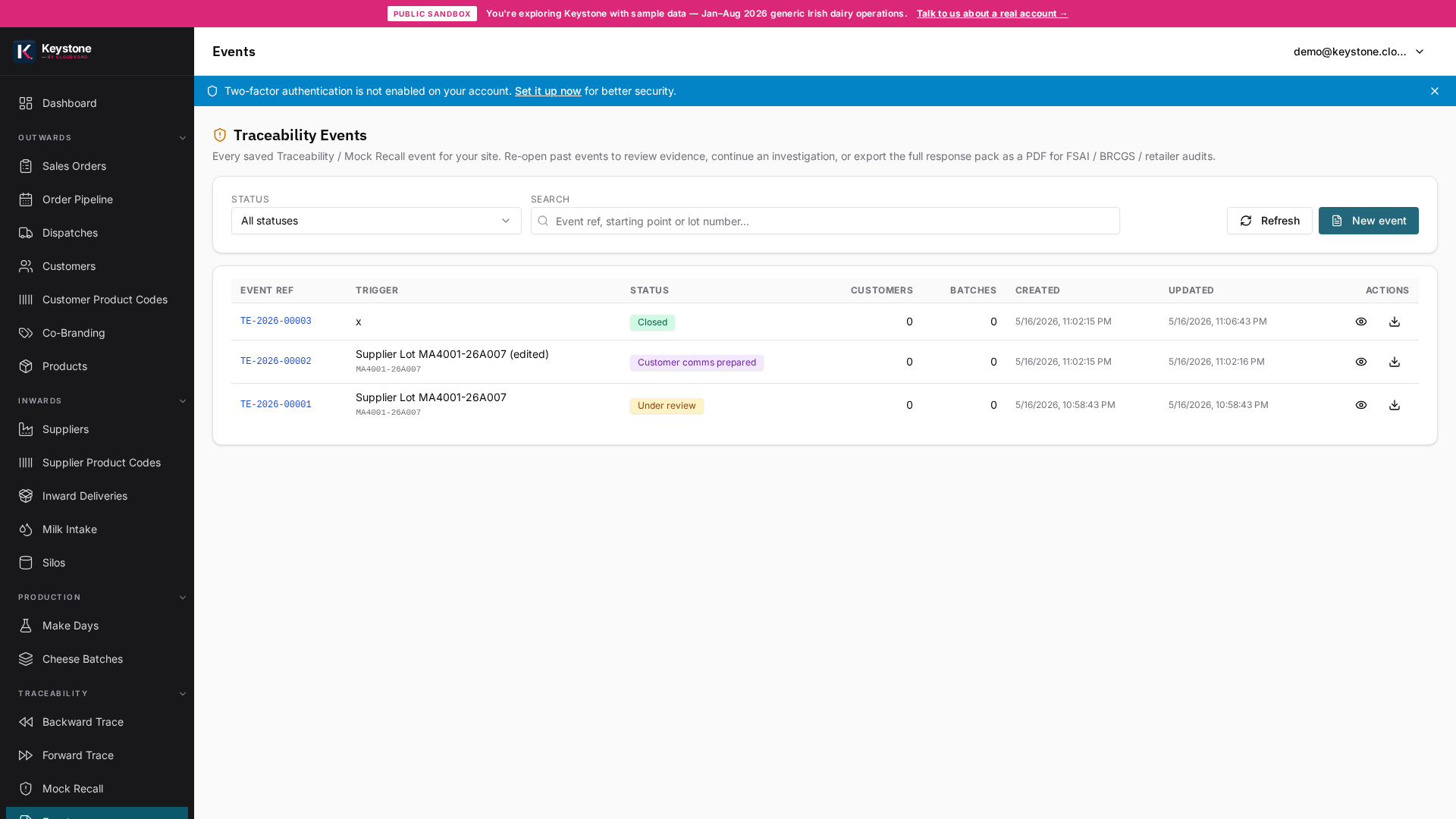
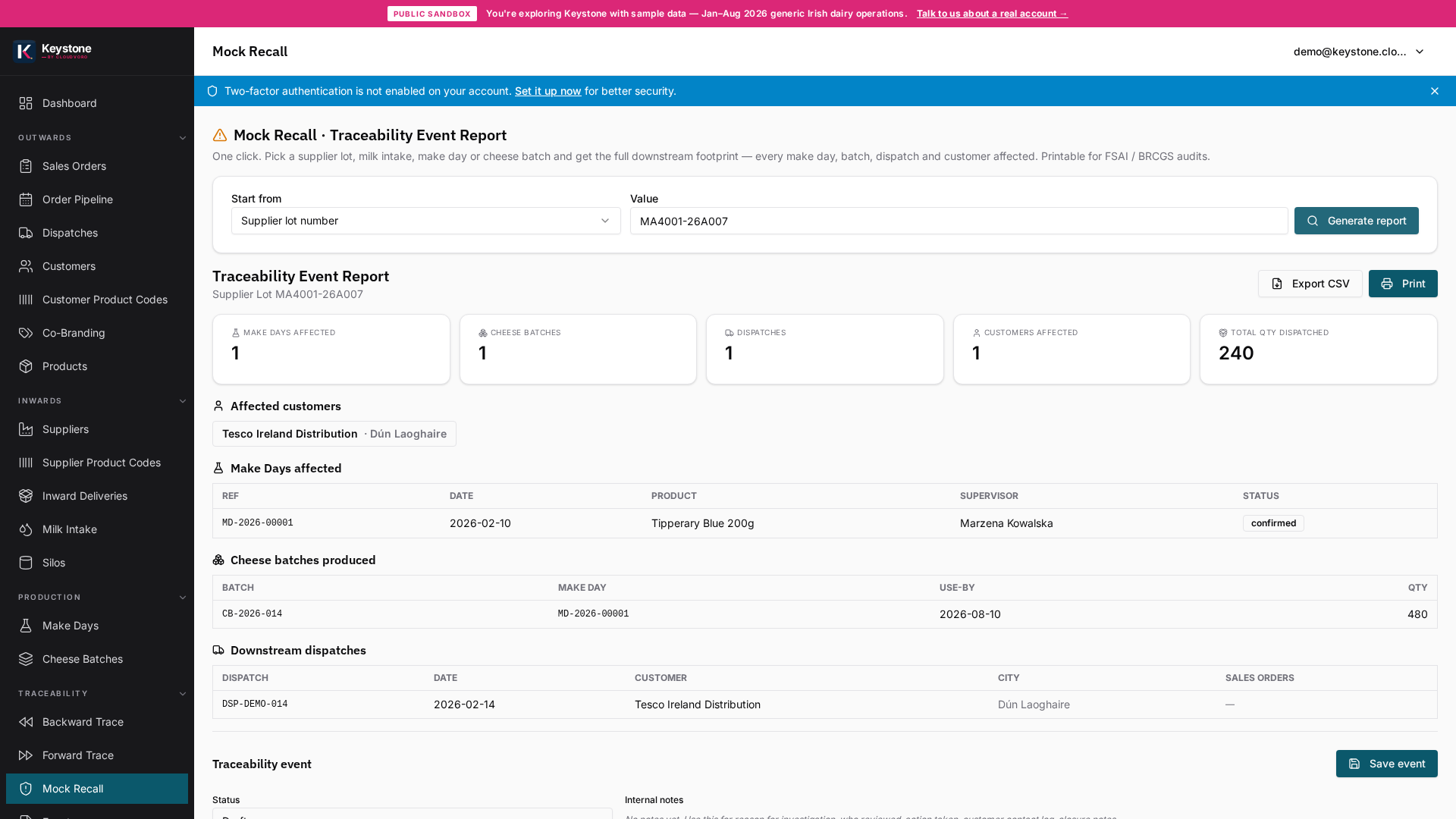
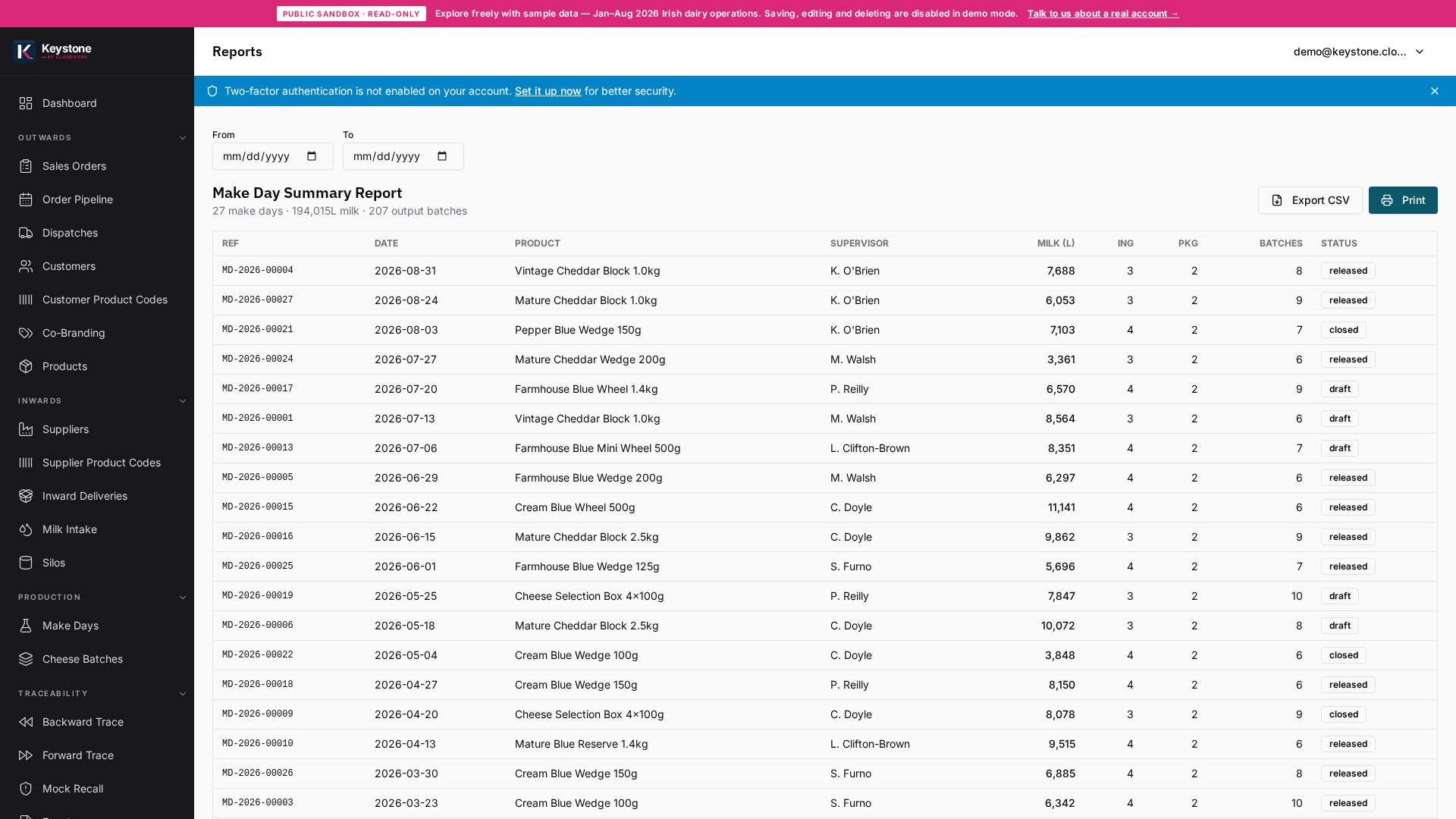
Der Bereich Rückverfolgbarkeit in der Praxis.
Ein SALSA‑Audit geht Ihr Lebensmittelsicherheitssystem in einem für Kleinproduzenten angemessenen Umfang durch: HACCP‑basierte Verfahren, Lieferantenkontrolle, Kennzeichnung und Rückverfolgbarkeit. Bei der Rückverfolgbarkeit ist die praktische Übung gefragt: Der Auditor wählt ein Produkt oder eine Zutat und verlangt, dass Sie die Verbindung in Ihren Unterlagen nachweisen – Lieferant und Charge auf den Eingängen, Charge/Batch in der Produktion, Kunden auf den Ausgängen – mit Mengen, die aufgehen. Produzenten bestehen diese Prüfung auch auf Papiersystemen; versagen tun langsame, personengebundene oder lückenhafte Aufzeichnungen. Entscheidend ist die Vorbereitung: Führen Sie die Übung zeitlich erfasst selbst durch, bevor der Auditor kommt.
Software für Kleinproduzenten — keine abgespeckte Enterprise‑Suite.
Wählen Sie das Zertifikat, das Ihre Abnehmer tatsächlich verlangen.
SALSA eignet sich für kleine und Kleinstproduzenten, die unabhängige Händler, Hofläden, Feinkostläden, Gastronomie und regionalen Handel beliefern. BRCGS ist der Standard der Multiples für Eigenmarkenbelieferung und das Eintrittsticket für größere Verträge. Viele Produzenten holen zuerst SALSA und steigen auf BRCGS um, wenn ein Händlervertrag es verlangt; die Rückverfolgbarkeitsdisziplin überträgt sich vollständig, wenn Ihre Aufzeichnungen von Anfang an chargenbezogen sind. Wenn Sie beide Optionen abwägen: Unser Leitfaden zu den Rückverfolgbarkeitsanforderungen von BRCGS zeigt das Gipfelziel; die Anforderungen von SALSA sind dieselbe Strecke, aber mit sanfterem Anstieg.
Related pages on this stack.
Fragen, die Einkäufer tatsächlich stellen.
Ist Keystone SALSA‑zertifizierte Software?
Ist Software erforderlich, um SALSA zu bestehen?
Ist Keystone für einen Kleinstproduzenten erschwinglich?
Was ist der Unterschied zwischen SALSA und BRCGS?
Können wir auf demselben System von SALSA auf BRCGS umstellen?
Bereit herauszufinden, ob Keystone zu Ihrer Produktion passt?
20‑minütiges Kennenlerngespräch. Kein Verkaufsgespräch. Schriftlicher Leistungsumfang innerhalb von 48 Stunden, falls wir zueinander passen; andernfalls Empfehlung an einen geeigneteren Anbieter.
Kontaktieren Sie uns