Oprogramowanie produkcyjne dla producentów żywności gotowej.
Każda partia składnika, w każdym gotowym daniu, do każdego klienta.
Gotowy posiłek to prawdziwy test systemu śledzenia: jedno finalne SKU może zawierać gotowane białko, sos przygotowany we wtorek, blanszowane warzywa od dwóch dostawców oraz dekorację — każdy ze swoją partią, alergenami i okresem przydatności. Gdy pojawi się wątpliwość co do któregokolwiek składnika, musisz wskazać wszystkie partie dań, do których trafił, oraz wszystkich klientów, którzy otrzymali te partie. Keystone został stworzony właśnie z myślą o tego rodzaju problemach.
- Receptury wieloskładnikowe: każda partia rejestruje faktycznie użyte partie składników
- Obsługa składników pośrednich: sosy i gotowane komponenty są również partiami, łączonymi w gotowe dania
- Gotowość do wycofań z powodu alergenów — najczęstszy powód w produkcji żywności gotowej
- Wbudowane formaty wysyłek dla detalistów i mapowanie kodów marek własnych
Real screens, from our Public Sandbox.
Every screenshot below is captured from the Public Sandbox demo tenant with sample Irish dairy data. No mockups, no client data, no NDAs.
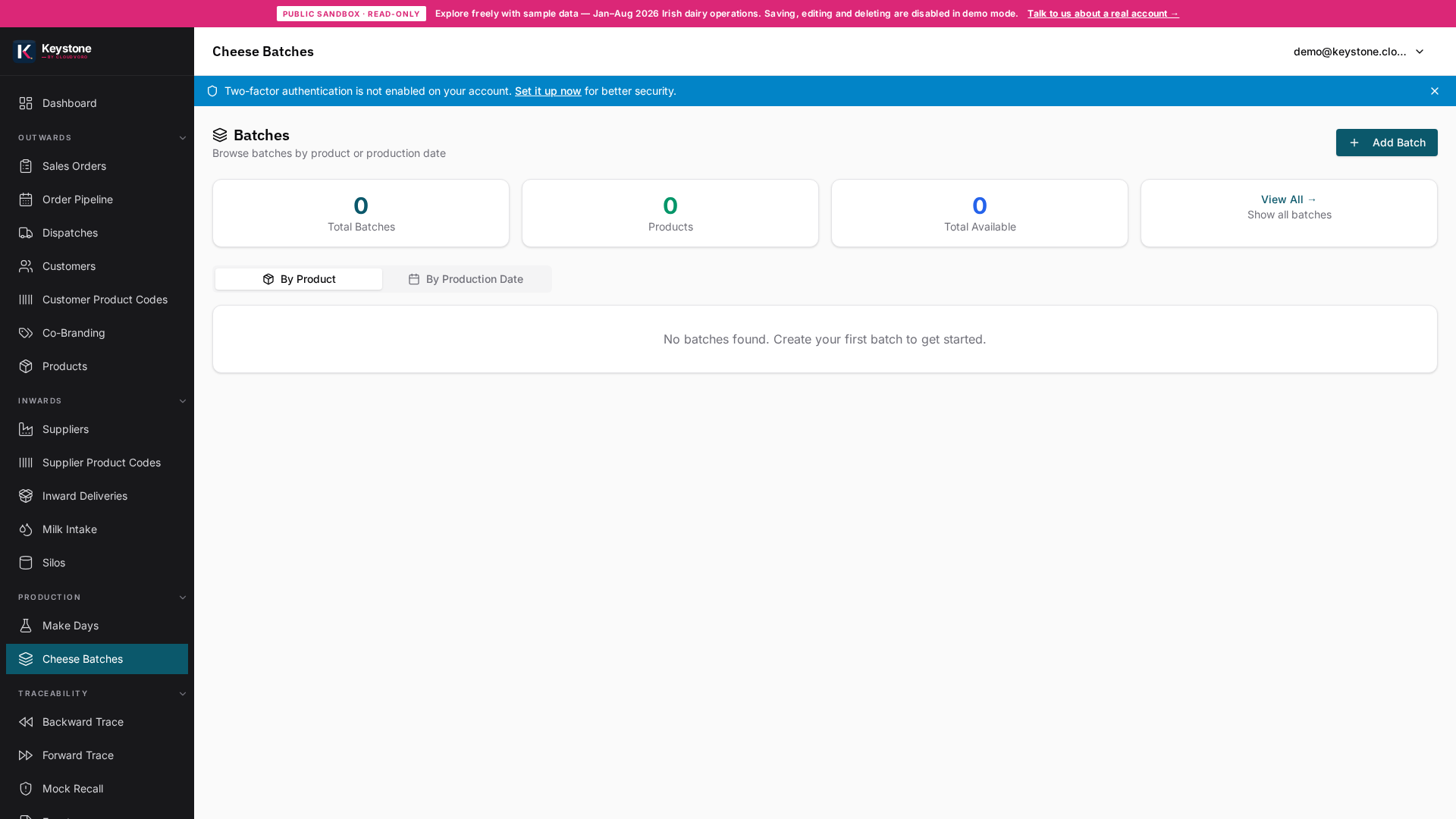
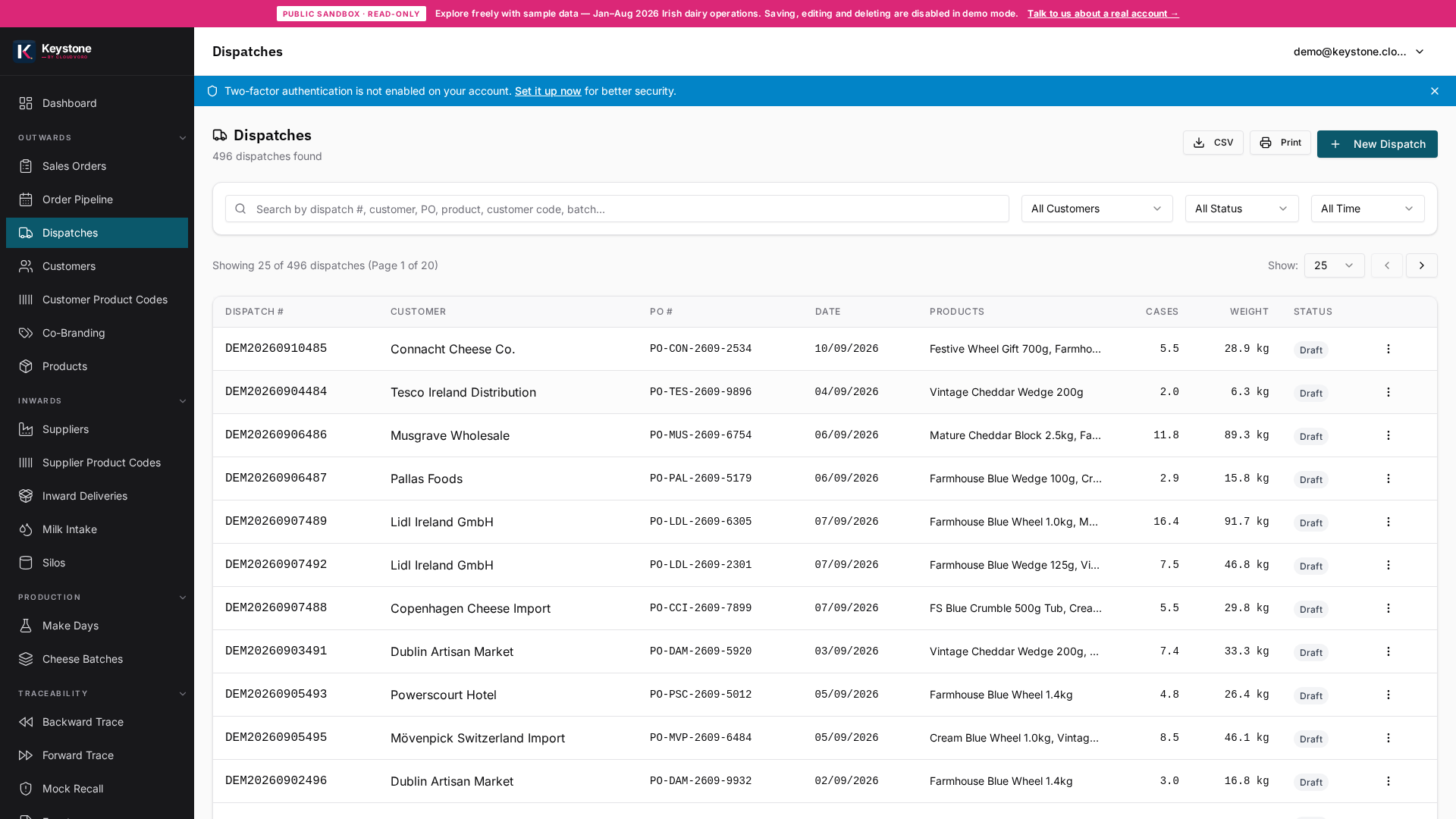
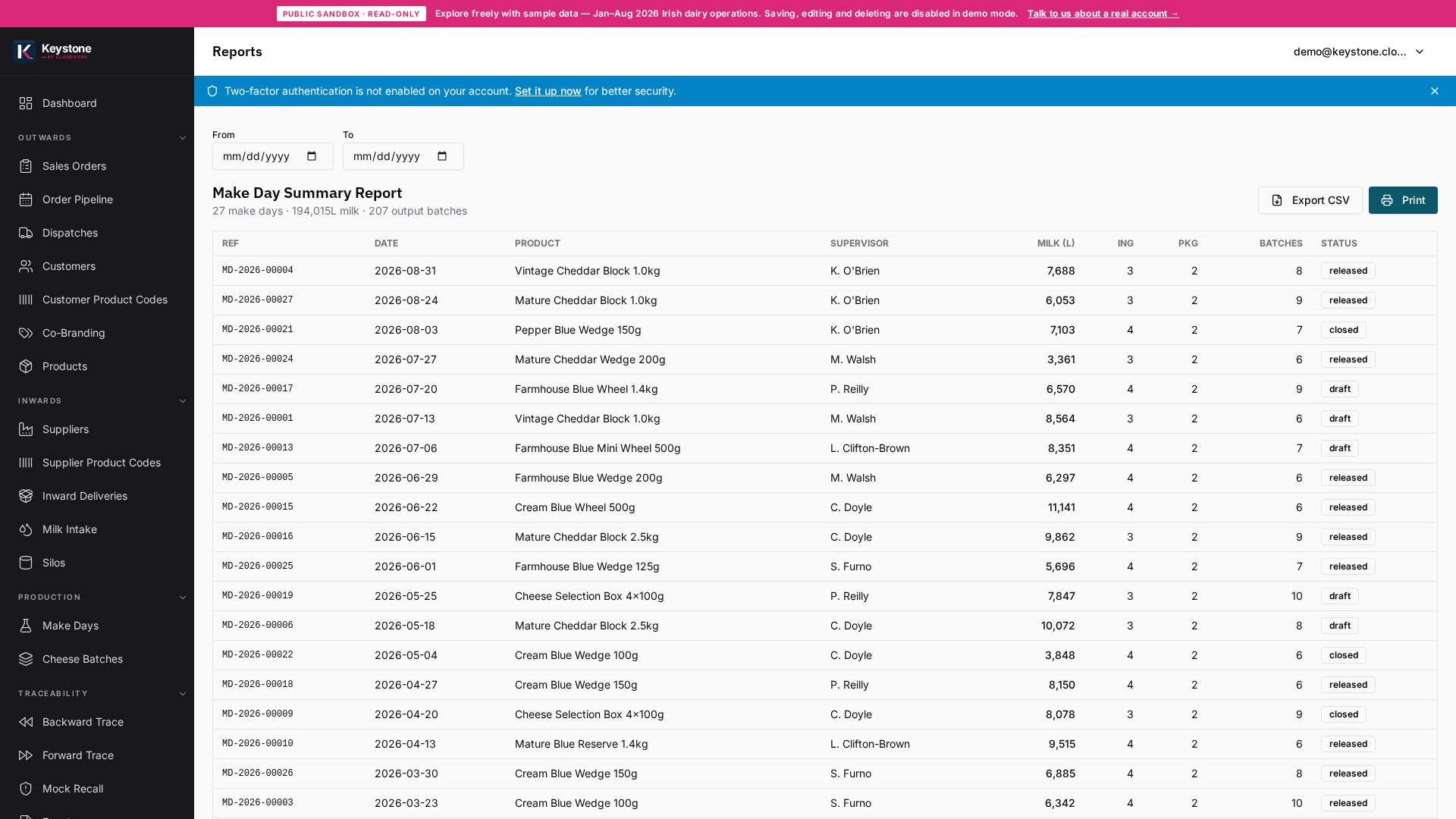
To przy składnikach pośrednich arkusze kalkulacyjne przestają wystarczać.
Produkcja żywności gotowej to produkcja wewnątrz produkcji: sos jest partią, ugotowany ryż jest partią, a gotowe danie zużywa obie. Systemy oparte na arkuszach spłaszczają to do jednego wiersza na danie i tracą pochodzenie składników — a właśnie to sprawdza alert alergenny lub akcja wycofania od dostawcy. Keystone łączy partie w struktury dowolnej głębokości: partia sosu tikka zna partie przypraw i śmietany; partia dania zna partię sosu; śledzenie od wycofania śmietany przez dostawcę do wpływu na konkretne SKU dań na półce detalisty zajmuje jedno kliknięcie — z ilościami.
Czego producenci żywności gotowej potrzebują od pierwszego dnia.
Dowody zgodne z BRCGS, generowane z bieżących zapisów.
Dostawcy żywności przygotowanej dla sieci detalicznych pracują pod presją audytów BRCGS i wymagań technicznych detalistów, z półrocznymi ćwiczeniami z wycofania produktu. Keystone oblicza łańcuch dostaw i bilans masy na podstawie tych samych zapisów, które produkcja tworzy codziennie, dzięki czemu test czasowy śledzenia — od komponentu do przodu lub od potrawy wstecz — zamyka się w minutach, a jedyną pracą ręczną pozostaje opis. Stworzone we współpracy z irlandzkim gospodarstwem jako partnerem założycielskim; model wieloskładnikowej partii to ten sam, na którym opiera się produkcja żywności gotowej.
Related pages on this stack.
Pytania, które rzeczywiście zadają kupujący.
Jak rozbudowane mogą być łańcuchy komponentów?
Dostawca wycofał składnik — jak wygląda śledzenie?
Czy zapisy kontroli jakości można przypisać do partii?
Czy obsługujecie kilku detalistów z marką własną dla jednego dania?
Ile czasu zajmuje uruchomienie?
Chcesz sprawdzić, czy Keystone sprawdzi się w Twoim zakładzie produkcyjnym?
20‑minutowa rozmowa wstępna. Bez prób sprzedaży. Pisemny zakres w ciągu 48 godzin, jeśli się dopasujemy; jeśli nie — skierujemy do bardziej odpowiedniego partnera.
Skontaktuj się z nami